JULIE EVTEEVA MEDIA STUDIES COMPONENT 1
FILM INTROS
All my research and future planning and production is dedicated to the horror genre. I started my research with analysing first 2-minute introduction of the famous ghost horrors to explore the generic conventions of this genre.
THE CONJURING








PLOT
The Conjuring is a 2013 horror film about paranormal investigators Ed and Lorraine Warren who are called to help the Perron family, who are experiencing escalating supernatural events after moving into a haunted farmhouse in Rhode Island in the early 1970s. The film depicts the family's encounters with a dark, malevolent presence and Lorraine's clairvoyant abilities as they try to understand and combat the haunting, which is based on the Warrens' real-life case files.
MISE-ON-SCENE
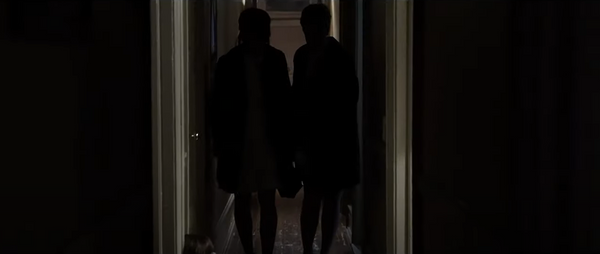
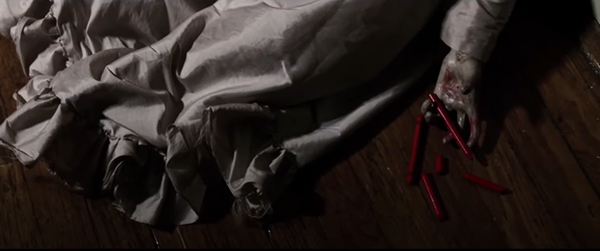
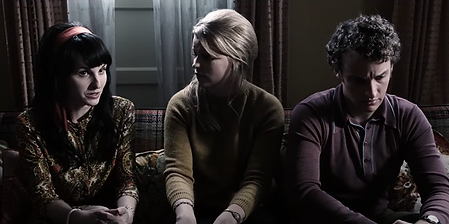
The scene starts with an extreme close-up of the doll Anabelle, which slowly moving backwards, so the audience could see how the doll looks like. From the beginning it already establishes the horror film features: creepy doll, red blood and scratches on her cheek and dark shadows. Three young people, two nurses and one man, are sitting on the sofa and being interviewed about the creepy doll. These 2 women represent those-times fashion (1968) using natural hairstyles (braids and headbands), earthy colours (beige, green, brown) of clothing and knee-length skirts, which make the story very realistic, so the audience can think it is based on the real events. The low-key lighting is used throughout the whole introduction. This usually creates the effect of mystery, fear and threat. From the very beginning the audience is stated with disequilibrium (by Todorov), creating the feeling of something going wrong. That directly links to the genre theory by Neale.
ENIGMA CODES (BARTHES)
When we first the extreme close-up of the creepy doll Anabelle, it immediately scares us (the audience), and encourages to ask such questions as: who is this doll? what is she going to do?.
Afterwards, the audience sees these 3 people, which directly links to the questions, like: how does this doll relate to the characters? what happened? this evokes the feelings of a fear in the audience without a given context.
We might also be wondering why this is being recorded on the interview. that leads to the enigma: is it that important to be recorded? and why is it studied?
these enigma codes "hook" the audience by creating the intrigue and curiosity. They are based on Anabelle the doll, who she is and how she is going to interact with the main characters, which engages the audience with the action by establishing suspense and tension.
SOUND
at the very beginning of the film, there can be heard a clicking sound. It turns on at the same time when the doll Anabelle appears. There is a natural silence following the action. This silence creates a sense of foreboding and increases tension. After a few seconds the quiet dialogue is being accompanied by non-diegetic spooky sounds, namely a drone, some noises and low tense melodies that consistently rise in pitch to increase the tension. All these sounds contribute to increasing the level of anxiety and unease, fear and suspense in the audience. At the moment when 2 nurses come into the room, there is a three-chord melody, which sounds very thrilling and frightening. This is the turning point or little climax of the introduction, when the broken photo frames are shown. The scratching sound followed increases the tension even more to indicate the exact scary moment. There is also some diegetic sounds added. A good example of these is the short gasping breathes. They make the watchers to feel more scared as the breathes increase dramatic effect.
LIGHTING
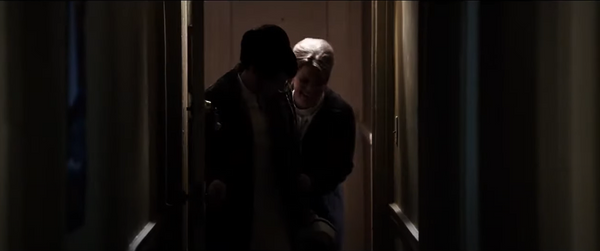
the low-key lighting is used throughout the whole intro. It has the shades of black, grey and blue, which makes the audience to start feeling tension or mystery while watching it. Faces of the characters are partly seen, creating the shadows in the place. Mostly, the light is passed through the window, which makes the film look very realistic, establishing the “true story” horror. There is an interesting feature of lighting used: when two women open the door to enter the flat, they do not switch on the lights inside, which makes it look even darker and scarier, pointing to the audience that something wrong is going to happen right now. When the woman opens the door to the room the straightforward white light is set on her from the floor. Afterwards, when she pulls the door, and we can see that spooky lighting is unrealistic, lighting does not match what is happening.
CAMERA WORK
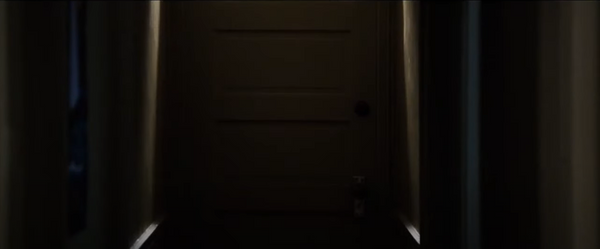
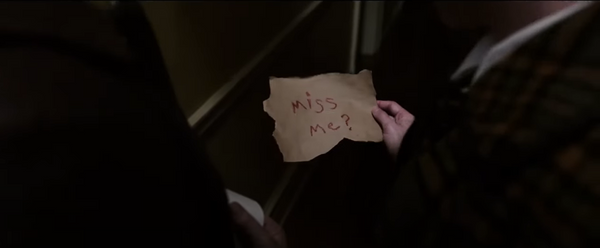
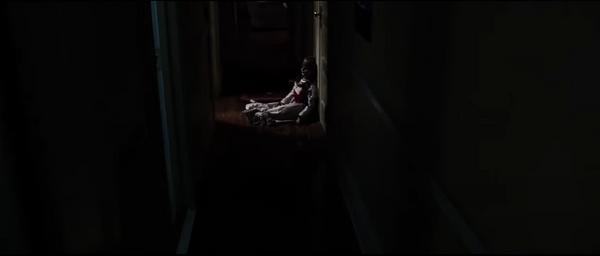
The production starts with the extreme close-up of Annabelle, which is intended for deep psychological impact. This shot creates suspense and tension, so the audience is getting scared right at the beginning of the action. Afterwards, we are provided with the medium shot of the main characters, who are talking about the doll. They are sitting on the sofa and being questioned by the interviewers. This shot helps the audience to understand the overall atmosphere present in the action and what mood the characters have, which contributes to the audience's emotional reflection. There is a wide shot of the opening door in the corridor. Before the it opens, there is seen a small light coming through the crack of the door, which makes the audience feel unease and tension as nobody knows what is behind the door. When the characters enter the apartment and get the note from the floor, over-the-shoulder shot appears. This type of shot is shown again when we see the doll sitting on the floor at the end of the corridor. That immediately tells the audience what is happening and how the characters are linked to Annabelle. Right after, the reaction shot of the women appears with a tracking effect, which engages the audience by moving towards the doll. This effect is enhanced even more by the pov shot. The camera is placed that way, where the character's eyes would be, showing what the character would see. It helps to connect the audience emotionally with a character. the following shots (when one of the females enters another room) the shot sequence is breathtaking: pov shots of photos in broken frames is followed by the reaction shot, which guides the audience in how to react on the action happening.
REPRESENTATION
the two female characters reflect the stereotypical view of women, which brings theory of Van Zoonen on board. They are being innocent, scared and threatened, taking the place of passive roles here. Their mise-on-scene performance, specifically emotional facial expressions of fear and threat, enhance the vulnerability.
the doll Anabelle constructs the meaning through signs and codes that are part of media language (Stuart Hall). Usually, dolls represent childhood and joy, associating with playing with it, when we were children. However, this particular doll demonstrates evil, violence and innocence. This representation is built via encoding and decoding.
Encoding (using visual, technical and narrative codes):
1- doll as a symbol of childhood, safety and care
2- audience would predict, the doll s innocent
Decoding (using culture, beliefs and experience):
1- audience could notice that the doll is hiding the evil behind the "innocence"
2- the figure (the doll) that was supposed to protect the child became a threat to a child
1408








PLOT
1408 is a psychological and supernatural horror about a man who doesn’t believe in ghosts — until he’s forced to confront both the paranormal and his own emotional demons inside a cursed hotel room that feeds on guilt and despair.
When Mike arrives, the hotel manager, Mr. Olin, desperately tries to stop him — revealing that over 50 guests have died in that room, all within an hour of checking in. Mike, dismissing the warning as superstition, insists on staying. This is where the introduction takes place.
MISE-ON-SCENE
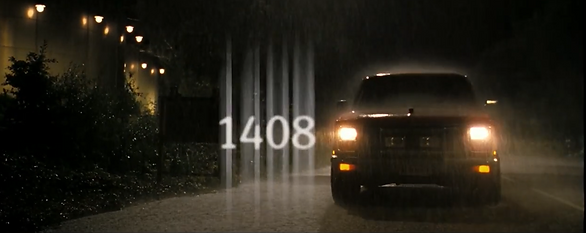
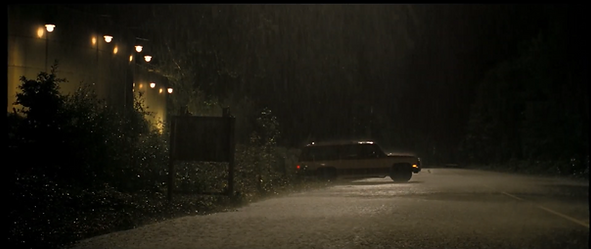
The dark rainy road with low-key lighting from the sidewalk appears on the screen. There can be seen the headlights popping up from afar. The car is moving forward speedily, and then suddenly came to an abrupt stop. For me, it suggested the idea of something wrong action, because the car stops unnaturally, which brings tension to the watchers. Another interesting feature I’ve noticed is that most of the scenes in the introduction includes the yellow colour in it. For instance, yellow headlights, streetlights, car and even interior in the hotel. This affects me as the audience by creating the signal of something not natural or psychological illness, which makes it look more cryptic. That mise-en-scene performance helps the audience to realise the genre of the film, which is a horror (Neale).
ENIGMA CODES
as the film opens with the driving car, the audience immediately is willing to know where the main character is going? why is he going that late at night? why alone?
Following the action, Mike arrives to the hotel, he seems exhausted, but the hosts start questioning him, so we wonder why they do that? why the hotel is cursed? what might happen to the character?
SOUND
introduction starts with the torrential rain sound, accompanied with the tensed low melody. This is the combination of diegetic and non-diegetic sounds. There are also many uncertain sounds, like screaming and aggressive talk, can be heard in the background. When the main character appears in the hotel, music fades. The melodies used are low-pitched with lots of suspended notes. That helps to create the tension even before the scary action takes place.
LIGHTING
The lighting of the piece is used to reflect the mood of the film and characters’ feelings. The low-key lighting creates mystery and threats, like it is presented in the scene where Mike is running across the bridge when it is raining heavily.
The light from the streetlamp is weak and limited. It shows how empty the area is, which makes the audience to feel wary and in danger. There are also like car lights that mark the known space (which is lighted) and the unknown one (which is in the darkness). This mirrors the ignorance of what is going to happen when the car turns around and goes to the opposite direction.In the hotel there is a dim warm light to show the cozy and homely atmosphere, which eventually might be deceptive. Here, the warm type of lighting with yellow and orange tones gives the audience a false sense of calm.
SETTING
the introduction is set on the dark road where the car suddenly appears. It is the isolated and lonely place with some buildings next to the sidewalks. It then shows the character in the car, which makes it feel very unsafe as he is the only one driving on this road at night. Mike arrives at the old and scary building.
CAMERA WORK
The introduction begins with the first establishing shot. This shot introduces the location, here it is the hotel “The Weeping Beech Inn. It answers the question of the audience “where are we?” helping to easily understand the place the action takes place in. we can see the isolated road, one car, and rainy and stormy weather, which establishes the idea of him going somewhere alone. Another interesting feature I’ve noticed in this scene is how the camera is moving as a tracking shot to bring the audience closer to the car, so we are expecting to see something mysterious like a jump scare. There is another establishing shot shown when the character arrives to the hotel. It dissolves from the previous shot, smooth transition happens from one shot to another, which makes it clear for the audience that the journey that the character has made was very long.
In the high pov shot, the camera is looking down to the car, which creates more vulnerable effect and a feeling of somebody chasing the character. If we consider this shot as high angled pov, then it indicates that someone is pursuing the character. This also makes the audience to feel the threat. It makes it look like somebody is watching the main character. There is a link between this shot and another one, which is taken from the same exact place and angle, but a bit later, which proves the hypothesis of having the chaser.
The close-up shot helps to read the emotion of the character. He looks tired and disappointed on the shot after he realises, he is lost. There are some other close-ups which make the film look very emotionally-full.
The shot of the signpost shows what a character is looking at. The camera is placed right where the character’s eyes are, sharing the experience of the character. Therefore, it makes the audience to feel fear and vulnerability. It also brings the suspense as we do not see what is happening behind the camera.
The over-the-shoulder two-shot presents the dialogue between two people to indicate new character entering the production. so, the audience can clearly see and understand which characters are in the frame.
REPRESENTATION
According to Stuart Hall's theory of representation, Mike Ensllin (the protagonist) plays the role of decoder here, while the manager of the haunted hotel wit the room 1408 is an encoder:
1) encoding - Mr Olin attempts to talk about the haunted hotel room with Mike, using narratives and warnings. That creates the reality circumstances, which make Mike to be scared of.
2) decoding - Mike Enslin acts here as audience, meaning that he interprets a message and respond to decoding in his own way. He rejects the encoding of Mr Olin, not believing in the supernatural ghost that has killed many people in that room; he interprets the room as a regular hotel room, not the haunted supernatural place.
Bringing on board Van Zoonen's feminist theory, masculinity is constructed to be the socially dominant gender and, as a result, is more likely to be constructed as an active participant within media text. The dominance of men within society thus leads the media to produce radically different presentations of males than it does females. Mike is shown from the masculine side of the theory: he is the central subject, who drives the narrative in the opening scene, investigating haunted sites. He is also very rational and individualistic: his actions, like driving at night under the pouring rain, visiting the hotel, align with the "professional" and "rational" male role.
THE AWAKENING











PLOT
The Awakening is a gothic psychological horror that explores grief, repression, and belief. It begins as a story about exposing lies but becomes one about facing truth — blurring the line between science and the supernatural, and between the living and the dead.
The Awakening follows Florence Cathcart, a professional ghost debunker and author who uses logic, science, and technology to expose fake spiritualists who exploit people’s grief.
all the action in the introduction is based around her.
MISE-ON-SCENE
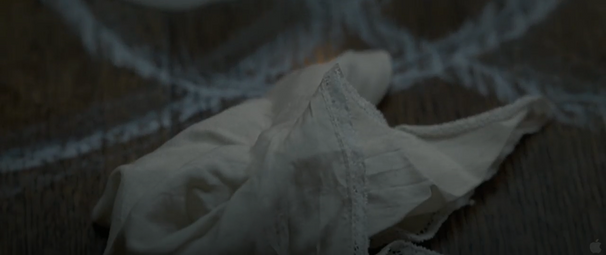
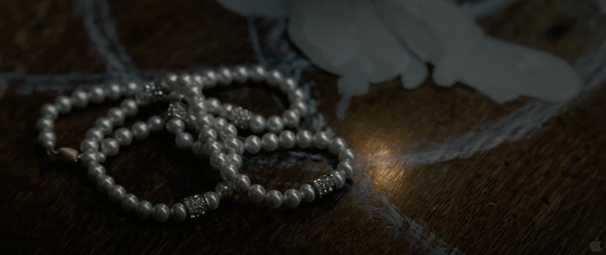
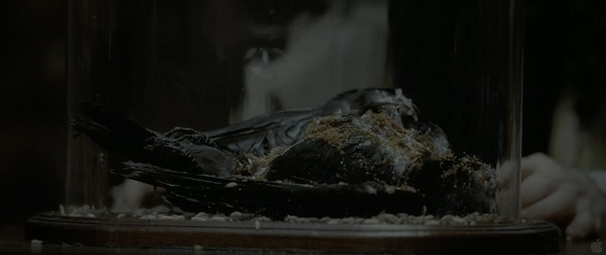
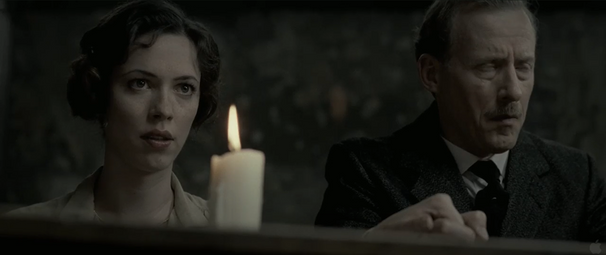
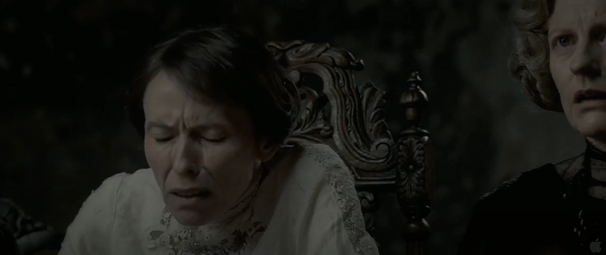
The introduction sets up in a big old and dim house. There is a long table, where the characters are sat, with lots of candles on it and other witchcraft/ritual attributes, like a strand of blond hair, photo of a young man, necklace and a kerchief. All of these bring the ideas of something mystical and supernatural, indicating the similar features of horror genre (Neale). The low-key lighting is provided by the candles and shadows, which create enigma and secrecy. It is clearly seen that all the characters in the film are tensed and scared. That makes the audience to start feeling the same way as the tension is building up.
TITLES
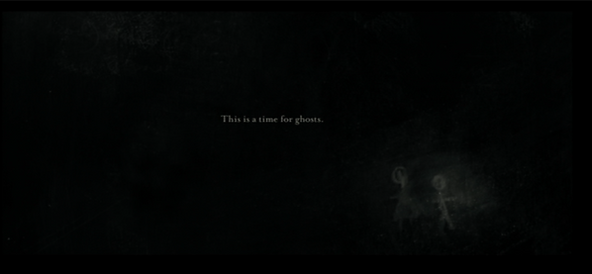
The only anchorage appearing on the screen over the 2-minute introduction of the film says “1921 LONDON”. It is written in a very simple and plain way. It might be done to show the contrast between the spiritual rituals and the realistic events, so watchers could think about them as historical ones, but not just mystical fantasy.
ENIGMA CODES
When we first see the characters sitting at the table on the séance, the audience are interested in getting the answers on “is it real?”, “what is going to happen now?”, “is the ghost going to appear?”.
When the main character - young lady Florence Cathcart interrupts the séance, we start thinking about who this lady is and why she is the one who interrupts the ritual.
Finally, talking about the anchorage, which says “1921 LONDON”. The audience extremely interested to know “why is this year chosen?” and “was there anything special done in 1921 in London?”.
SOUND
The introduction starts with the trilling sound, while the characters on the screen having a dialogue. There can be heard bells, played 7 times. This creates mystery and the most important, it enhances the topic of the church and spiritual objects. Intriguing music starts as the ritual is about to get started. There are brass instruments used, which create tension. During the action happening on the screen, as the ritual going further, these instruments increase in pitch (becoming higher) and dynamic (becoming louder), which might make the audience to feel anxious.
LIGHTING
The low-key lighting is made by using candles. This creates various shadows in the room. Only some parts of the characters’ bodies, like faces or hands, are lighted and the other ones are in the darkness, which creates the feeling of mystery, threat and suspense. All these types of lighting used bring the idea of uncertainty and secrecy, as the audience expect to see something spiritual and mystical.
SETTING
The introduction is set in London in 1921 (as we can see that on the anchorage). There is a ritual happening in the old house. It is lighted with the candles and lamps. All of these create dark, mysterious and gothic atmosphere.
CAMERA WORK
The introduction begins with the over-the-shoulder close-up, so the young lady Florence Cathcart is seen. It then changes to another close-up of another character Mod Hill. And there is one more close-up of the young lady pulling out a piece of paper from her pocket. So, there can be seen about 6 close-ups only for the first 15 seconds.
Several shots here show the closing door. There are 3 of them: when Florence Cathcart enters the house, afterwards when she comes into the room, and finally, when she sits at the table and the curtains are shut down. This creates the effect of mystery, and that the audience is not supposed to see the action happening on the screen as it is a secret.
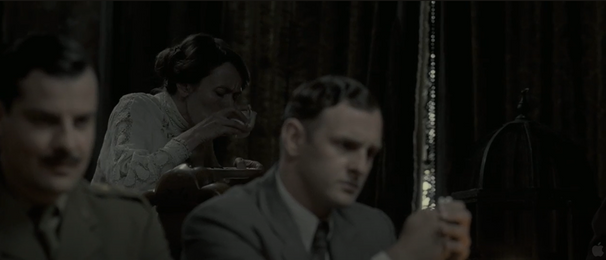
The shot, when we can see Mod Hill drinking something is made like a pov shot, so we understand that someone is looking at her. It makes the audience feel involved, as they can see the action through the character’s eyes.
Lots of tracking shots are used, so the camera is moving during the action. They create the feeling of stalking and being watched, which emphasis this feature as a key one in horror films. It also might make us feel involved, as we are pulled into the investigation of the main character.
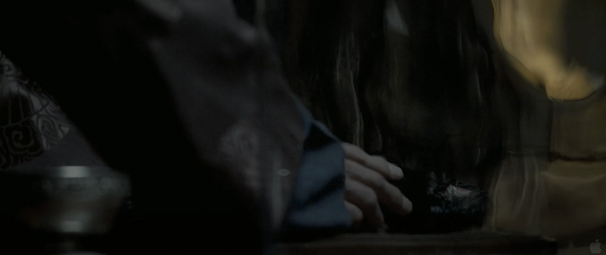
Many close-ups are used for the ritual objects to highlight their significance, when they do witchcraft. They change very fast to enhance the tension and make the audience to understand that something wrong is going to happen very soon.
REPRESENTATION
On the first shot, when Florence appears on the screens, this is where the first representation is created. She is presented as a mysterious and even potentially dangerous character by framing herself in a limited space of a doorway, which suggests uncertainty and unease. Besides, the use of silence (no diegetic and non-diegetic sound) enhances this representation of isolated and independent woman. Therefore, the audience might decode her as a threatening or supernatural character. Nevertheless, her silence and mystery may make the audience to decode her in a bit different way during the 2-minute introduction: as a victim and innocent female character.
However, Florence challenges Van Zoonen's theory. She is shown very independent and strong woman, who plays an active role in the film, which highly contrasts with the stereotypical female character in horrors , who are usually passive, emotional and vulnerable. Florence breaks from the expected performance of femininity, like submissiveness and compliance, and instead performs a more active role, challenging the idea that femininity is inherently passive.
INSIDIOUS








MISE-ON-SCENE
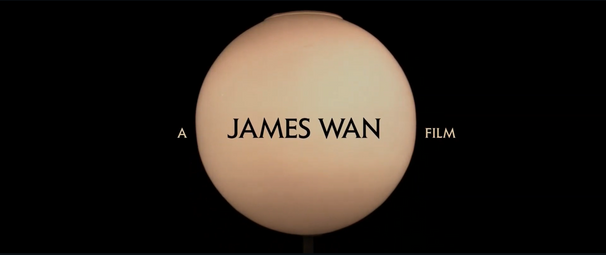
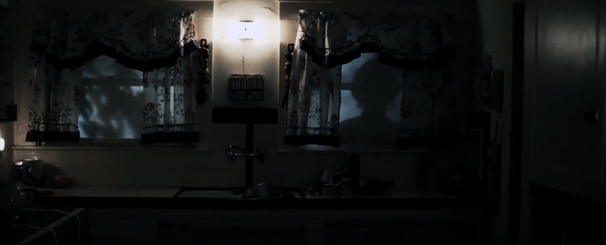
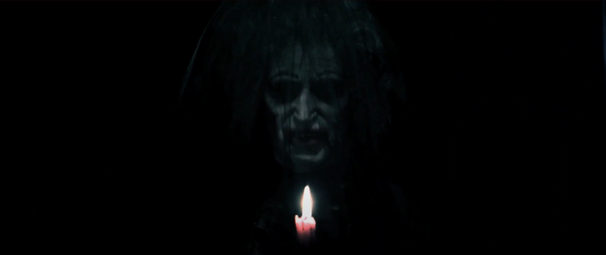
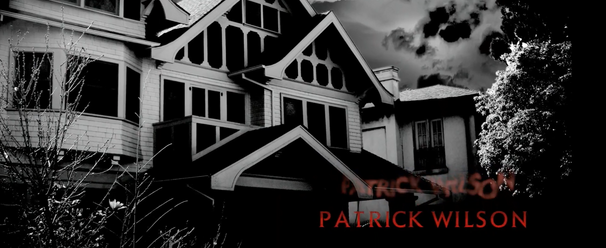
The introduction begins with the intro credits. There is a little boy laying on the bed in the old, haunted house and sleeping. The nightlamp is turned on, which creates the illusion of a peaceful place. The tracking shot moves towards the hall, where the creepy, human-like shadow appears on the window. The scary ghost then suddenly pops up. It carries a candle in its hands. The low-key lighting and cold blue tones contribute to getting a feeling of mystery and unease. A series of various shots with the house views are shown afterwards. It lets the audience establish the first impressions on the house, how creepy and scary it is, which links to the idea of similar conventions in the horror genre (Neale).
ENIGMA CODES
first thing that makes the audience feel uncertain is the shadow, which reminds us of a human-like shape. what is it? is it a ghost or a human? why does it look like a real human? is it going to scare us right now? these are the questions we want to ask when the camera tracks closer to the window with this shadow appeared.
As we do not see any characters (except the boy) in the frame, it is scary to explore an empty house. there is the following: who lives here? Why is there no people around?
TITLES
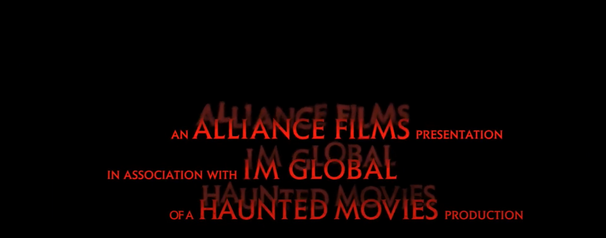
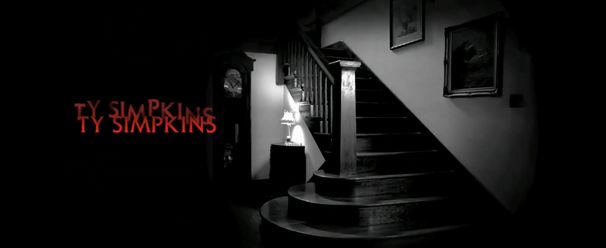
First credits we see in introduction are written in bold red serifed text. Red is associated with blood and danger. The type of font – serified, relates to Gothic style, something old and classic, which makes the credits look tall and more dramatic. the background is black that creates the contrast between the 2 colours and makes it look creepy, pointing at one of the at one of the key features of horror. The way they are presented is thrilling. They appear slowly with a ghostly effect, so they somehow fade out. Another interesting feature in titles I’ve noticed is the main title “INSIDIOUS”. It appears abruptly and suddenly in red gothic-styled font. It changes in different levels of brightness (the same way as it works for lighting), creating sharp and fast transitions. Eventually, audience feels secrecy and mystery while watching it.
MUSIC
When the opening with film corporations is presented, in the background there are various sounds of breaking glass, hitting metal thing, a clock and a ring. These causing concern sounds make the audience feel scared even before the actual physical action happening at the start of the film.
The house is quiet, which contrasts with the non-diegetic sounds – music that only the audience can hear. It is full of high-pitched string melodies, which might be representative for a scream.
The range of dynamics also brings the mood wings to the audience. As the dynamics rises, tension builds up. Therefore, we could feel uncomfortable, scared and threatened.
LIGHTING
The dark night atmosphere is achieved by the low-key lighting. It uses cold tones with shadows. There can be seen a bedside lamp near the bed where the little is sleeping, which creates the illusional feeling of peace and calm. It also highlights the boy’s vulnerability and purity. The human-like shadow enhances the feeling of being watched and something unnatural happening. All of these make the audience feel mystery and unease.
another interesting feature ive noticed, which is created by both the camera work and lighting, is when we see the ghost with a candle, it is predicted to have a very sudden scary moment right after. Nevertheless, instead of something wrong happening, the lighting goes down, so the screen is blackout.
CAMERA WORK
There is a long continuous tracking shot from the very beginning (even from the credits) until the close-up shot of the creepy ghost. It moves slowly and cautious as if it was a person going through the house. This feeling is created by the pov shot. The zoom-in of the ghost seems scary and unexpected. However, instead of making this moment even more spooky after, the action shuts down.
Following this, some view shots are shown. The tracking wide shot of the old, haunted house, another wide shot room with multiple windows in a room and the mystical stairs. There is a aerial shot, showing the stairs from the above. This creates the sense of secrecy and the feeling of stalking people in the house.
THE RING







PLOT
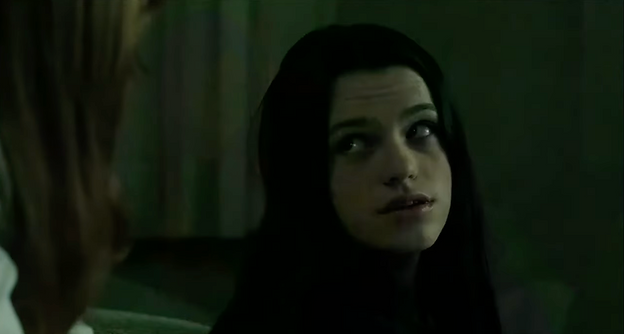
"THE RING" is about one journalist - Rachel Keller, who investigates a cursed videotape, that kills viewers seven days after they watch it. After her niece dies and Rachel watches the tape herself, she races to uncover the backstory of the ghostly girl, Samara. Samara is the one, who created it to escape her fate, before her time runs out.
The opening scene of the film involves two characters, who set up the central plot of the curse: teenagers Katie Embry and her friend Becca Kotler.
MISE-ON-SCENE
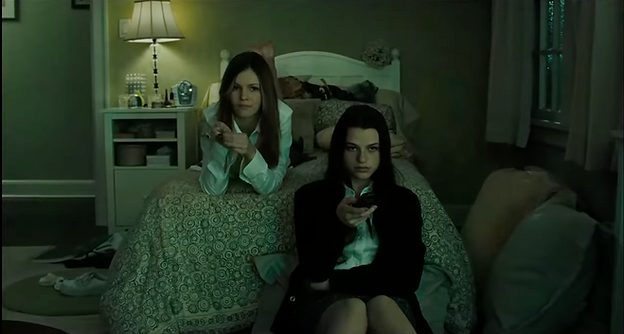
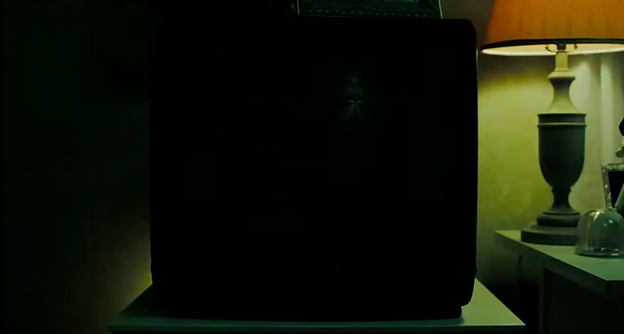
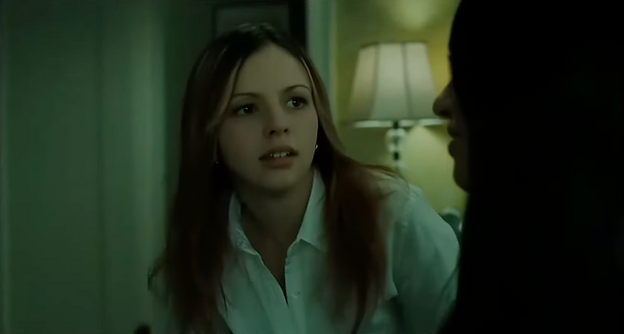
The production starts with the shot of the old spooky suburban house, located somewhere in the green area/countryside, as the audience can see the trees, woods. It is dark and rainy - night time. The interior setting is then shown: 2 girls - Becca Kotler and Katie Embry, are sitting in the bedroom, the bedside lamp is on, TV, which is central to the composition, is playing various channels (Becca switching the channels). The door behind is open. Katie (the blonde girl) is laying on the bed, while Becca (the brunette girl) is sitting on the floor, leaning on this bed.
When the TV is shown, we can see the TV advertisement that says "70% extra body", linking to everyday TV and media industry idea, which contrasts strongly with the supernatural TV, namely, the cursed video tape, that Becca is telling the spooky and terrifying story about.
Katie looks very scared at once, however, she is the one who made a final joke of this story, pretending passing out. Right from the beginning, the film sets the features of a horror genre (Neale), like mise-en-scene performance of the actors and their emotional expressions, setting and the sound of rain.
ENIGMA CODES
one of the first enigma codes in the first 2-minute introduction of The Ring is the dialogue between the 2 girls about the strange video tape. Becca says, "You start to play it and its like somebody's nightmare. The audience immediately questions: what video is Becca talking about? is it scary? What happens when you watch it? Is it actually real or she is making it up? Then the girl answers most of this questions: "Then suddenly this woman comes on, smiling at you, seeing you through the screen", still keeping the answer to the question "what is going to happen with after you watch the video?" in secret.
There is another enigma code that i found very tricky to notice, it is the change of the mood and tone throughout the introduction. At the very beginning peaceful and casual mood is set up, while the girls are watching the TV. Nevertheless, when Becca is telling the scary tape video legend, the mood and atmosphere suddenly changes to intriguing and anxious state as Katie is getting very restless. This creates the enigma: why is she nervous? What caused her fear? It makes the audience "hooked", as they wonder if the story is true or not due to the unease reaction of Katie, which creates the character mystery.
COSTUMES AND MAKE UP
from the very beginning, the two girls are introduced to the audience. They wear classic formal shirts and skirts (typical representation of teenage girls fashion in early 2000s) , which make us to associate them with the students. This adds to their young-looking faces, so we understand they are students. Their style is very realistic and modern, which highly contrasts with the surreal idea of the horror. The girls' make-up is minimal and very natural to show typical high school students.
MUSIC/SOUND
the opening sequence use both diegetic and non-diegetic sound. The film starts with the non-diegetic sound of pouring rain from outside, when the stablishing shot of the house is shown. It carries over the next shot, where the girls are sitting in the room talking to each other about the TV (diegetic), and becomes a bit quieter to indicate that this diegetic sound is still present, but comes from outside. There is no non-diegetic sound from the beginning, like soundscape, that usually adds the tension and suspense to the action. However, this quite and "peaceful" atmosphere makes the audience to expect something supernatural or scary to happen, as a lull in horrors is generally associated with the fear and terrifying unexpected/sudden event coming up.
When Katie first mentions the phone ring, saying that it happened to her recently, the immediate soundscape is added and heard by the audience. That could be done to help the viewers to indicate where the enigma comes from, in this case - the phone ring and this ghost.
LIGHTING
the lighting used in this opening scene is natural low-key, dim lighting, which creates the atmosphere of unease and builds up the tension. The establishing shot, where the haunted house is shown, is extremely dark, which was done specifically to make the audience scared and willing to know what is going to happen in this dark house next. Afterwards, as the girls are being in the house, the lighting should be realistic, so natural warm light was used.
However, it can be clearly seen that some colours, like blue and green, were added either on the post-production, or filming with a special washed our blue colour filter on the camera. This signifies the audience that this film is a horror, as the casual situation (two girls sitting, hanging out in the room) is converted into a spooky one by just adding the colours in lighting that do not reflect the reality (green and blue).
CAMERA WORK
the production starts with the establishing shot to introduce the location, which helps the audience to understand, where the action is about to take place. This establishing shot shows dark stormy night, that is immediately associated with the upcoming horror by the viewers.
afterwards, there is a dolly zoom shot (first time appeared from the researched films). Here, the camera moves closer to the girls, who are sitting in the bedroom, while simultaneously adjusting the zoom angle to keep the subject the same size in the frame. That makes the girls (subject in the frame) to appear stationary, while the background size changes (perspective distortion). Besides, on this show, the camera movement is very slow. Horror filmmakers do that usually to build the tension naturally, rather than doing a sudden fast jump scare. The shot is interrupted by the POV shot of the TV, where the TV advertisement "70% extra body". This helps the audience to experience the action, which is happening on the screen, through the eyes of the characters. Eventually, the viewers get more emotionally attached to the characters and the storyline itself.
There are some over-the-shoulder shots and over-the-shoulder reverse shot, which are used for the dialogue between Becca and Katie. The shots flow smoothly, and the audience easily identifies two characters, who are talking to each other.
One shot that I found very interesting for myself is the low-angle shot, where Becca (brunette girl) is sitting up from the floor to the bed next to Katie. It makes Becca to look more dominant in the frame, the camera shoots the power between the two girls. This might be a little hint to the rest of story (threatening videotape with her).
There is a long zoom-in shot of Becca, when she is telling the story about the videotape with the smiling woman and the ringing phone right after watching the video. That adds more unease, suspense and threat to the atmosphere.
The use of medium two-shot makes the frame to encompass two characters, when Katie starts choking.
REPRESENTATION
the girls are represented in the 2-minute opening in a very stereotypical point viewpoint, following Van Zoonen's gender theory. They are playing a passive role, acting very emotional, sensitive and weak. On the moment, when Becca is telling Katie the terrifying story about the haunted videotape, Katie's facial expressions show the audience how scared and vulnerable she is.
From the Stuart Hall's point of view, the opening scene constructs a, scene of "vulnerability," "dread," and "supernatural danger" through cinematic codes, like blue/green low-key lighting, slow camera movements and their costumes of student girls. The characters are teenage girls, who lack parental protection. This group frequently represented in horror as vulnerable or "sacrificial", as Stuart Hall stated that media often employs stereotypes, often created by dominant, hegemonic groups (for example: white, male,, middle-class) to represent others.
GENERIC CONVENTIONS AND ICONOGRAPHY
BARTHES
As I have discovered from the research, Barthe's Enigma codes are the moments of mystery that intrigue and "hook" the audience. In these films they are shown through the lighting, music, camera movements and character's acting.
"THE CONJURING" and "THE AWAKENING" convey these feelings of uncertainty, unease and fear mostly by using extreme close-ups and the sound: non-diegetic sounds especially, intriguing and suspended melodies make us feel uncomfortable.
In "1408" and "INSIDIOUS" it is mostly achieved by using the low-key lighting, muted colors and thrilling establishing shots. For example, in "1408" the shot of the hotel, where the action takes place, enhances the feeling of a fear and threat, as the audience has no idea where they are, why exactly there and if there is a ghost or no.
In the "Ring", enigma codes are brought to the audience through the characters' dialogue, as when the girls talk about the video tape, and the audience wonders what they are talking about? is it scary? is the ghost actually going to appear soon?
LEVI-STRAUSS
Levi-Strauss discovered binary oppositions. Thanks to the research and analysis of the film openings, i discovered that this is the idea that meaning is dependent upon and produced through pairs of oppositions. It is also crucial that these oppositions are resolved, which can have particular ideological significance. they create the conflict, hence, the sense of drama.
"1408": fist noticed binary opposition in "1408" is between the main character Mike Enslin and the hotel manager/host. It is generated through the idea of the skepticism and disbelief in ghosts and supernatural of Mike Enslin and the disbelief in it of the host. There is another binary opposition between Mike (the protagonist) and supernatural spirits, showing the contrast between realism and supernatural existence.
"THE CONJURING": the most obvious and clearly seen opposition is between the girls and the creepy doll. The girls represent the innocence, while the scary doll play the role of something evil and threatening.
"THE AWAKENING": during the seance the idea of death is shown through the ritual that the characters do. However, there is a binary opposition to that - life, which is represented by the main female character Florence Cathcart.
"INSIDIOUS": it is created through the figure of the boy and the shadowy thing that scares the audience. This produces another binary opposition innocence and threat.
"THE RING": the first binary opposition shown in the opening is between the girls and the ghostly girl from the videotape. they represent the conflict between vulnerability, innocence, naivety and threat, danger, fear.
Eventually, it is important that these binary oppositions are resolved, however, it is going to happen by or towards the end of the productions, that is why i could not find the resolutions for the oppositions in the first 2 minutes of the films.
TODOROV
Todorov is philosopher who brought the idea of equilibrium and disequilibrium. It is the idea that involves the movement from one state of equilibrium to another, and these two states are separated by a period of imbalance or disequilibrium. The same as it worked with Levi-Strauss , this idea has to be resolved , which can have particular ideological significance. Todorov's theory plays a vital role in generic conventions of horrors:
"1408": the equilibrium is first established when the film begins, Mike Enslin is calm and rational at the time he is driving. Disruption happens, when the character enters the hotel and sees the hosts, who are telling him about the scary and threatening story of the cursed hotel. The new equilibrium is shown much later, at the end of the film.
"THE CONJURING": the disruption here happens during the flash-back, when the girls enter the apartment. They opened the door, they are talking and are happy (equilibrium) until they see the note (disequilibrium). this creates the enigma code of mystery and fear, which reduces tension, so the audience becomes emotionally attached, entertained and hooked. This disequilibrium is resolve by the spooky doll Annabelle, which the audience can see after the several shots.
"THE AWAKENING": right from the beginning, we know that something is going wrong, as there is no certainty if the rituals are real or supernatural. the disruption is generated through the spirits that the audience are waiting for. it is resolved at the end of the introduction, when the blinds open by Florence Cathcart. This action represents the domination of rationality over the superstitions.
"INSIDIOUS": the innocent sleeping boy is shown that produced initial equilibrium, the state of stability and rationality. The action that disrupts it is the moment, when the tracking shot goes further, the music becomes more tensed and the lighting is much darker. but the new equilibrium, when the balance is achieved has not been reached yet.
"THE RING": in the opening the disruption appears straight from the beginning, when Becca starts telling Katie the story about the videotape. That makes the audience to feel that something is going wrong, which helps to build up the tension.
The audience appeal on the Todorov's theory is that they become emotionally attached, so the disruption has more of an impact. This makes the audience, also, willing to see what is going to happen next to get the disruptions resolved. Besides, equilibriums help us to make predictions of a product and to have a certain expectations of it.
SOUND
overall, the sounds used, including diegetic and non-diegetic sounds, enhance all the emotions of the viewers. There are suspended notes, creating dissonance, sharp changes between high and low pitches and complete silence, before the screamer appears. they create tension and suspense, which make us feel uncomfortable in order to scare us.
The audience wants to ask what object is making the sound or noise and why it is coming from that direction.
In "THE CONJURING", for example, the audience is engaged by the mystery/intrigue of what is making the sound creating an enigma code when the door of the apartment opens.
LIGHTING
low-key lighting is always used to create the specific atmosphere needed to scare the audience in the horror lighting. it usually creates various shadows due to using 3 line lighting.
The lighting shapes the mood of the action, suggesting threats without telling the audience straight away. They want to know why it is dark in there or if there is going to be a jump-scare right now or no.
In 1408 it is clearly noticeable that binary oppositions used, when the character drives at the scary night to the hotel, but on the next day, he is singing the song in his car when it is brought and sunny outside.
LOCATION
firstly, the location where the action is set up plays a significant role in horror films. In this case, all the films take place in a haunted space and isolated settings. For instance, "THE CONJURING" - the apartment where Annabelle was cursed, "1408" - the hotel room (1408) with a ghost, "THE AWAKENING" - old townhouse where seance took place, "INSIDIOUS" - family house that turned into the place evil invades, "THE RING" - haunted house. it creates unease and tension as the audience do not know what and where everything is happening.
Talking about enigma codes, specific location makes the audience to wonder why it happens here and what is haunting.
Especially in "INSIDIOUS" we can notice binary oppositions of Levi-Strauss related to the location. The nice family house, which eventually will be teeming with evil ghosts.
CAMERA WORK
the shots in horror films used help to create generic conventions and iconography. They are the visual expression of fear, suspense and tension. These are the most common and impressive shots that the contributes to getting a sense of fear and threat throughput the stories:
1) POV shot is the one hat shows what a character is looking at (represented through the camera). It is filmed like a bit shaky and unsteady to convey the audience that these are the real movements of the character. For instance, in "THE CONJURING", when the girls take the note and go towards the corridor to see the doll, pov shot is used, so the audience can experience the same thing as the character does.
2) CLOSE-UPS are the shots that frame the person or the object such that a smallish object. The best examples are from "THE AWAKENING": close-ups that show main characters right at the beginning of the production, and from "THE CONJURING": extreme close-up of the doll. they assist the audience with better reading of emotions or reactions, which build the tension or showing the detail and reveal something key, like ritual objects from "THE AWAKENING".
3) TRACKING AND PANNING shots are there to show the slow movement through the corridors or hallways. To be more specific, tracking shots follow the character or object as it moves along the screen, the camera follows backward, forward or moves alongside the subject being recorded. while panning shots (panorama) are filmed by the movement of the camera body to the right or left on a vertical axis. The main example of tracking and paying together is shown in the "INSIDIOUS", which is used during the whole introduction. It moves the games slowly to show the haunted house. Slow pan through a dark house is used before revealing a shadowy figure.
This complex camera work creates unease and expectations of something that the audience is going to see. Is it a ghost? what is this shadow? what other fears might appear?
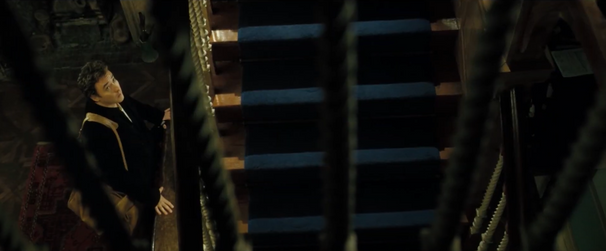
4) HIGH ANGLE shot is when the camera looks down on the subject from a higher angle. This makes the subject look small, vulnerable, insignificant to threatened. A great example from "1408" can prove that: the shot, when Maike Enslin is looking up to the stairs. It weakens his power and reinforces the difference between the human and supernatural objects.
5) ESTABLISHING SHOTS play a very crucial role in the horror movies. Why?
firstly, these are usually the first shots of the production, they might be wide or extreme wide shots. They introduce a location and the space relationships inside it, showing the audience where the action is about to take place. In mostly all of the researched films, establishing shots are present:
"1408":
1-the fast-driving car on the road
2-the building of the old and haunted hotel ("THE WEEPING BEECH INN")
"INSIDIOUS":
the old cursed country house
"THE RING":
the old haunted house
PRODUCTION COMPANIES AND INDUSTRY
In the film industry, media products can be produced by huge multinational or corporations, or by small, local companies. Some companies make their names producing certain genres of texts. For instance, independent film company "blumhouse" built its reputation on producing horror films, while others offer a range of genres, namely Warner Brothers. The productn context of the film is also relevant, and this will in turn attract different audiences and communicate different messages about the film itself. Mainstream films are high-concept films with a high budget, while independent productions are less star-driven and can be seen to have lower production values.
Unlike mainstream's theory's of such theorists as Curren and Seaton (media is controlled by a small number of companies primarily driven by the logic of profit and power) and David Hesmondhalgh (media companies try to minimize risk and maximize audiences through vertical and horizontal integration, and by formatting their cultural products: the use of stars, genres and serials), independent films include more serious cinema goers, who want something different from the formulaic plot lines of mainstream films.



THE CONJURING

The film was produced by New Line Cinema, which is an american film and television production company. The studio was founded on June 18, 1967, by Robert Shaye in New York City, and has been operating as a unit of Warner Bros. Pictures since 2008. The film was distributed by Warner Bros. Pictures. The film is a mainstream horror. The film is a part of a high-grossing (meaning that it earned a massive amount of revenue, typically more than its competitors within a specific period or category), studio-driven franchise designed for wide theatrical release, relying on, formulaic scares, and massive box-office returns rather than indie-style, experimental horror.
1408

"1408" is a mainstream horror as well, produced by Dimension Films. It is a psychological horror movie known for being intelligent and atmospheric. While Dimension Films is known for producing indie and genre
titles, 1408 was marketed and released as a wide-release, "independent sleeper hit" with a mainstream appeal rather than a low-budget independent film.
The Weinstein Company was involved in the production and financing. it also played a key role in co-distribution in the US. The production company itself was an American independent film production and distribution company, which was founded in New York City by Bob and Harvey Weinstein on March 10, 2005. TWC was one of the largest mini-major film studios in North America.

THE AWAKENING

StudioCanal Features is a Europe’s leading film and television production, distribution, and international sales company. It produces roughly 20 feature films and over 15 series annually, while managing one of the world's largest libraries with over 9,000 titles. It was the lead financier for The Awakening. It also acted as a primary production company alongside BBC Films. The Awakening was produced with a budget of approximately £3.1 million, and StudioCanal leveraged its network to manage both the creative development and the commercial release of the film.
BBC films was founded in 1990. Its aim is to create and produce roughly 15 strong, ambitious, and distinctive British films annually. It works with UK and international partners to nurture new talent and collaborate with renowned filmmakers. The films of this production company are typically released in cinemas in partnership with major distributors before appearing on BBC platforms. For "The Awakening". BBC Films was a co-producer alongside StudioCanal. The film, which was the feature directorial debut for TV director Nick Murphy, was part of BBC Films' commitment to supporting British cinema.
INSIDIOUS

"INSIDIOUS" was produced by Blumhouse production company. Most of Blumhouse's theatrically released films since 2014 are owned and distributed by Universal Pictures as part of a 10-year first-look deal. Blumhouse is a multimedia company regarded as the driving force in horror. The company produces high-quality indie budget horror films, and provocative scripted and unscripted television series. They also
plan to produce and publish video games via the recently announced subsidiary Blumhouse Games. Some other examples of world-famous films produced by Blumhouse include:

"PARANORMAL ACTIVITY"

"SINISTER"
ADDITIONAL RESEARCH - A24
another independent production studio that is worth to mention is A24.
- a prominent American independent production company founded in 2012 by Daniel Katz, David Fenkel, and John Hodges. It specializes in the production, distribution, and financing of critically acclaimed, arthouse, and genre-bending films and television. Known for its distinct "vibe"—characterized by moody aesthetics and unconventional marketing, it has produced such films a "Hereditary" and "Midsommer".

Examples:
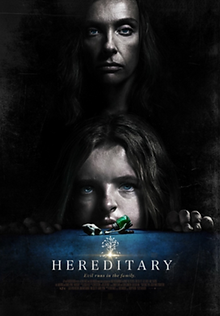
"Hereditary"

"Midsommar"
Synergy Example:
The film "Talk To Me", which tells a story about a group of friends discovering how to conjure spirits with an embalmed hand, then they become hooked on the new thrill and high-stakes party game -- until one of them goes too far and unleashes terrifying supernatural forces.
The film integrated into Fortnite’s Deadpines: Zombie Survival - the first time a horror movie has appeared on the platform globally, which created a synergy.

The integration features a playable experience intended to mirror the atmosphere of the movie, inclusive of notable locations like the Seance Room. The experience culminates with a final challenge in a haunted mansion, where players can unlock in-game rewards. Additional advertising for the effort includes in-game billboards and an advertising campaign in the U.K. and Ireland that spanned broadcaster (VOD) video-on-demand, social media and TV spots.
INDUSTRY
MAINSTREAM FILMS
- it is a model for a film and is used to describe the concept of the Hollywood mainstream, 'big budget' film. These productions usually target such audience as mainstreamers (Young and Rubican): 40% of the population of the world, they want to be like everybody else, want to fit in and like value for money; generally they are less likely to take risks, so they tend to choose more mainstream stuff. Additionally, such films involve a frequent use of BLT (Barthe - enigma codes, Levi-Strauss - binary oppositions, and Todorov's - equilibrium/ disequilibrium, theories).
I researched a world-famous mainstream horror "THE CONJURING" and with the example of it, i developed some criteria of high-concept film:
2) High production values evident in the cinematography, costumes, settings and special effects
= one of the references to "THE CONJURING" would be the built Perron house from the ground up to feel lived-in, featuring period-accurate, non-stereotypical "scary" items— just normal, vintage toys and furniture. Also costumes reflected the fashion of 1970s, featuring earthy muted colours and using textures that contrast with the dark scenes.

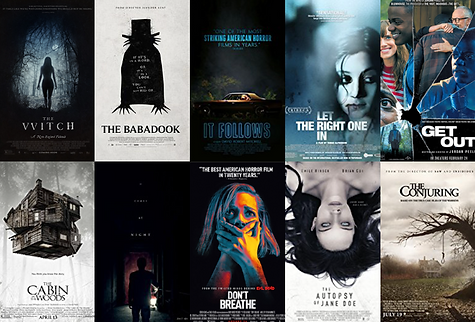
1) Clearly defined characters, often recognisable in terms of stereotypes and archetypes
= the nurses Debbie and Camilla are shown from very stereotypical point of view for female characters (Van Zoonen). The doll Anabelle is highly recognizable. While the real-life doll is a harmless-looking Raggedy Ann (the film is based on real events), the film intentionally redesigned her as a terrifying doll with a sinister smile to make her immediately menacing.

3) Highly dramatic, formulaic, and hyperbolic (unrealistic) plot situations.
= it is highly important to create and show the audience formulaic and unrealistic plotlines in order to catch their attention, so they could watch more and more films of the same filmmakers.
In "THE CONJURING" the doll Anabelle is an active, physically moving threat. The film exaggerates its powers to a hyperbolic degree to make it a terrifying focal point.
Curran and Seaton
This is an ownership effects theory. It includes the idea that the media is controlled by a small number of companies, primarily driven by the logic of profit and power. The media concentration generally limits or inhibits variety, creativity and quality.
"THE RING" was produced and distributed by DreamWorks Pictures (major Hollywood studio). According to Curran and Seaton, the media is dominated by a few powerful conglomerates driven by profit, which fits the production of this high-budget remake. The Ring was an American remake of a Japanese indie film (Ringu) designed for mass-market consumption rather than artistic experimentation (independent media). The original Japanese version is a more independent production from Current and Seaton's point.

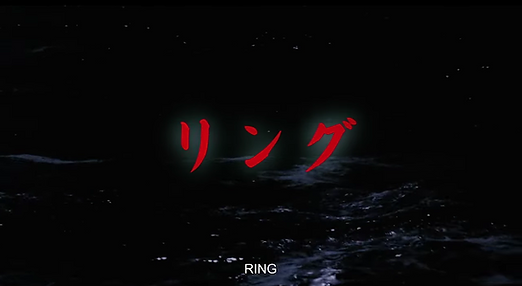
INDEPENDENT FILMS
Independent films are aimed at a niche audience, that is likely to include more serious cinemagoers, like reformers and explorers (from Young and Rubican theory). Reformers tend to be more liberal-minded and socially-aware; they are willing to change (reform) the society for better. Also another feature of reformers is support. Sometimes they watch independent films to support independent voices in the film industry, as filmmakers in the independent media industry find it more challenging to make the films and distribute them. Explorers like to discover new things, so they enjoy new experiences and innovations of independent filmmakers. So, independent audiences seek for information and want to learn about something, so they could fulfil their mental and intellectual needs (Uses and Gratification theory).
Conventions
There are some features of independent films, that are important to consider, when researching and producing independent film industry:
1) films are made outside the financial and artistic control of a major company
For instance, "INSIDIOUS" was produced by Blumhouse production company. Their aim is
to produce high-quality, genre-driven (primarily horror/thriller) films and television on a
micro-budget, granting creators significant freedom, and maximizing profitability through wide, strategic distribution.
2) clear evidence that such films have a lower budget
There are many ways that this could be shown. However, the most important one is lack of world-known acting stars. Independent film producers tend to choose actor, who are either just starting their acting career or getting new experiences. That indicates of a low-budget film, as filmmakers would not have to pay for acting in the film.
3) Artistic expression and creative control (auteurship)
Independent films may have a distinguishable style often related to the genre, the social message or the filmmaker. Independent filmmakers often have more creative control over their films, which means they a fully express their artistic vision without the interference of studio executives and producers. To provide example, I would like to mention "INSIDIOUS": it does not start with the straightaway explanation of the story, but instead, it uses long tracking shot to show the house. that means that the filmmaker of "INSIDIOUS" chose creating the atmosphere and mood over exposition.
DISTRIBUTION MODELS
As it is more challenging to promote independent films, there are various distribution models that could be used to gain success:
1) SOCIAL MEDIA AND WORD-OF-MOUTH MARKETING
due to the low budget of independent film companies, various social media platforms might be used to build communities, foster direct-to-audience relationships and become viral, as there are lots of people, who have social media apps, like Instagram, Twitter and Facebook.
Two-step flow theory could be applied: it states that media influence on the public is not direct but is mediated by "opinion leaders" (developed by Paul Lazarsfeld and Elihu Katz in the 1940s/50s). According to this theory, firstly, the information is received by opinion leader, who are trusted, knowledgeable individuals (for example, friends, family, experts), who consume, filter, and interpret media messages. Second step is that the opinion leaders should then pass their own interpretation of the information to the broader audience, so the broader audience's beliefs and behaviours could be changed due to the influence.
From the Henry Jenkin's spreadable media theory, "spreadable" content is driven by audience decisions to share material, rather than just "sticky" content designed to keep people on one platform. Independent film companies should encourage their fans to create, share, and remix the content. This turns the audience into marketers. Besides, transmedia storytelling can be used: Jenkins suggests expanding a story across multiple platforms, where each medium adds a unique experience to the narrative. For instance, the use of social media can be applied to provide "backstory" or "extended universe" content, encouraging fans to hunt for new information.
2) D-CINEMAS, DCPs AND VODs
D-cinemas (Digital cinemas) and DCPs (Digital Cinema Packages: secure digital format for theatrical projection) - these allow independent films to compete on the same screen quality as studio films, facilitating theatrical, festival, and community screenings, as independent film companies could book local cinemas to create a "big-screen" experience. This can drive subsequent online viewing.
VODs (video on demand) - allow independent producers to bypass traditional gatekeepers and target specific, niche audiences directly, often with better revenue splits. Platforms like iTunes, Amazon Prime, and Vimeo on Demand enable viewers to rent or buy the film. This is best for immediate, direct-to-creator earnings following a theatrical release.
3) LIMITED RELEASE AT SMALLER INDEPENDENT CIMEMAS AND FESTIVALS
screenings in local cinemas, like Everyman in the UK. Also, independent film companies will often be reliant on initial screenings at independent film festivals, for example Raindance Film Festival, Aesthetica Short Film Festival, London Independent Film Festival, and Sheffield DocFest, showcasing indie features, shorts, and documentaries. These events often feature networking, industry panels, and champion emerging talent across London, Bristol, and other cities of England. besides, FrightFest is often considered the UK's "dark heart of cinema". This major festival runs in London and Glasgow, showcasing the best in new international and independent horror. The success of the film will then be used in future marketing materials.
4) STREAMING PLATFORMS
there are many streaming platforms specifically for such audiences as explorers and reformers (independent audience type from the Young and Rubican's theory).
MUBI
- is a global streaming platform, production company and film distributor. It produces and theatrically distributes films by emerging and established filmmakers, which are exclusively available on its platform. The catalogue consists of world cinema films, such as arthouse films, documentary films, independent films. MUBI is dedicated to films, so it does not have a single TV series on the site.
MUBI’s philosophy prioritises quality over quantity and has become the home of a variety of niche films, Hollywood favourites, and the best pickings from international film festivals. MUBI has become the destination for film fanatics and a platform where fans can share, discuss, rate, read and enjoy all things film.

Examples:

"THE SUBSTANCE"
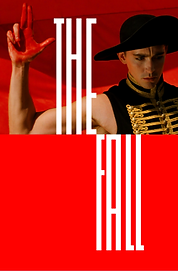
"THE FALL"


"BURNING"
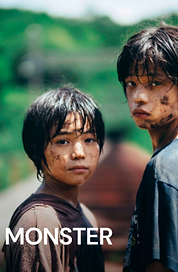
"MONSTER"
VERTIGO RELEASING
- is a leading independent all-rights Film Distribution Company in the UK, Ireland and select international territories. They have a reputation for crafting strong and exciting campaigns and have a unique instinct for creative and innovative release strategies. Their theatrical releases have grossed over $100 million at the UK box office, and they have won multiple awards for their campaigns. Vertigo’s commitment to discovering and championing quality independent films and filmmakers is reflected in the success of their releases. Additionally, Vertigo is a dedicated supporter of female filmmakers.
Examples:
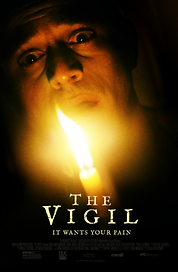
"THE VIGIL"

""THE SHROUNDS"

"THE BOOKSHOP"
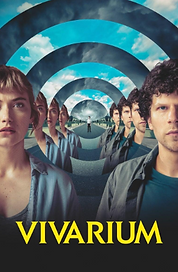
"VIVARIUM"
GRAPHICS
TYPOGRAPHY
Typefaces have connotations and can act as genre cues, so the audience could understand, which type of genre they are watching even without reading about or watching the trailer beforehand.
there are 2 type of fonts:
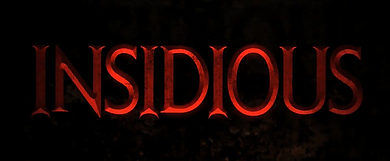
1- SERIF
this type of font has "little feet" and lines at the ends.
It also seems to look more elegant, formal, serious or
traditional.
In horrors' titles and credits, it also plays a role of
creating mystical, ancient and gothic atmosphere.
For instance, in Insidious the font is serif
(with these little endings on each of the letters).


2- SANS SERIF
this is a font without any "feet" (sans = without), and it does not have extra lines on the ends of the letters. Text in sans serif font seems to be more modern and streamlined, so it better suits for up-to-date and real-time film productions of drama, comedy and action genre.
For example, "Oppenheimer" starts with the title in sans serif font. It looks clean and modern, which links to the representation of physics, maths and chemistry world.
TITLE TIME LENGTHS
I did some additional research on the duration of the titles. From the films researched above i found out:
1) "1408"
actors names: around 4-5 seconds each name of the actor, overall, opening credits last for about a minute (from 0:02-1:10)
title: appears on the screen after the first two names of the actors (John Cusack and Samuel L. Jackson), lasts for 2 seconds
2) "INSIDIOUS"
actors names: 5 seconds each name of the actor. two minutes of the intro ends in the middle the credits of the actors starring in the film. There is a separate section of zooming-in views of the haunted house for it. Here, the opening credits included not only actors name, but also producers and designers names, that is why it lasts for a longer period of time - a bit over 2 minutes.
title: 6 seconds
In the films like "The Conjuring", "The Awakening" and "The Ring" the titles appear later than in the first 2-5 minutes of the films.
FILM NAME/ THE TITLE
Film titles are aimed to evoke fear and curiosity, playing on universal fears, like isolation or ghosts and monsters. Often, the titles shape how the audience understand, anticipate and emotionally prepare for the film.
Most importantly, they highlight the tone of the production: in the "Conjuring" - supernatural, unrealistic; in the "Ring" - paranoia, mystery and threat through the object (the phone). Besides, the titles play a role in establishing mysteries, which are enigma codes (Barthe). Namely, in the "1408" - what does this number mean? is it a hotel room? is it cursed? what is going to happen there?; or like in the "Halloween" - why is it happening on halloween? who is the ghost? what horror will happen on it?



TITLE SEQUENCES
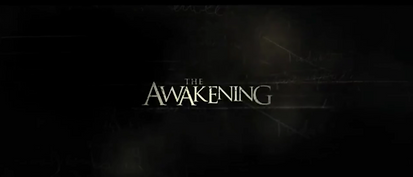
During my research i found out that most of the films start with the opening credits of the production company, before the title appears on the screen or the first shot of the film is shown.
"THE AWAKENING"

"THE CONJURING"

Both "The Awakening" and "The Conjuring" are co-productions, which means several production companies worked on these projects, being responsible for various areas of production (financing, filming and marketing), in order to release the final products. The order of the logos appearing on the screens after each other depends on the dominance participation within the projects. After the production company logos, the title usually comes in and appears on the screens.
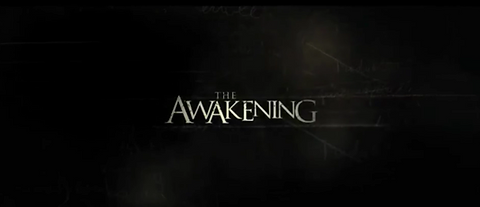

One interesting thing i noticed is the use of the anchorage, which is a special text, which can be expressed through captions, headlines and voiceovers, in order to fix, clarify, or limit the meaning of an image, directing the audience toward a specific interpretation. For example, in "The Awakening" the anchorage appears after the title, stating that the action is about to take place in London 1921.
It anchors the intended message, preventing viewers from interpreting an image in unintended ways. The anchorage also gives a sense of direction to the audience, as without it the viewers could be confused with the place and time periods, when the action is taking place at.
ACTORS NAMES
Actor names in horror film title sequences often utilize specific, atmospheric fonts to set the tone, ranging from classic, elegant serifs to harsh, gothic, or modern sans-serifs. Credits highlight lead actors, often setting a tone of dread or introducing stars early
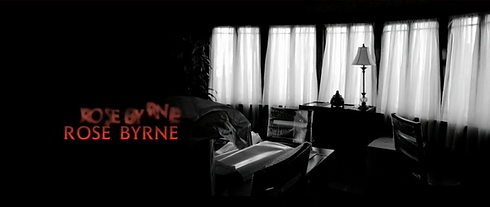
For the research, i decided to explore "INSIDIOUS" in terms of actors name in the title sequence. There are 9 names in the introduction: Patrick Wilson, Rose Byrne, Lyn Shaye, Ty Simpkins, Barbara Hershey, Leigh Whannell, Angus Sampson, Andrew Astor and Joseph Bishara. Each of them lasts for 4-5 seconds. The names are appearing with a fade-in and the shadow, which is shown in "ghostly" manner (the text is like dissolving). There is a fade-out at the end, so the names are disappearing slowly, which builds up the tension.

PRELIMINARY EXERCISES
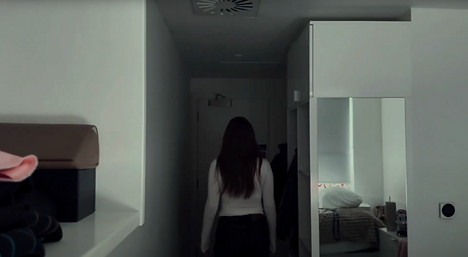
medium shot

close-up

pov shot

over-the-shoulder shot

wide pov shot shot

high angle pov shot

close-up
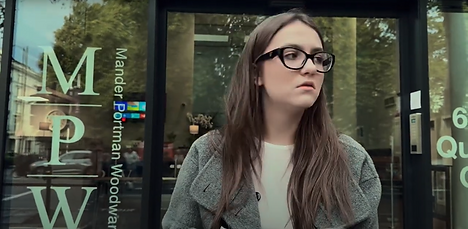
medium reaction shot

over-the-shoulder shot
This is my first preliminary exercise, where I experienced with the variety of shots and different angles, namely:
-
medium shot
-
close-up
-
pov shot (regular, high angle)
-
over-the-shoulder shot
-
reaction shot
-
wide shot
The little storyline includes: a girl is going out of her apartment. She feels that someone is following her. When she is outside, she finds the threatening note, which says "SAY MY NAME" (I was inspired by "THE CONJURING" scene, where the ladies pick up the note "MISS ME?"). She looks around, trying to find the stalker. At the same second she gets the call from "UNKNOWN CALLER".
I explored the Barthe's theory of enigma codes: in the first scene, where the girl is exiting the apartment, the first shots are tracking pov's, which makes the audience to start questioning where she is going? why she is going out of the apartment? is there someone following her?
Linking to Levi-Straus''s theory of binary oppositions: during the whole production, the main character - the girl, and the stalker create binary oppositions between the innocence and evil. This brings the essence of drama for tthe gratification of the audience.
Todorovian theory can be also applied to this exercise: it stated disequilibrium from the very beginning, when the girl exits the apartment, as the audience does not know why she is leaving, which suggests unease, suspense and tension. At the end. the audience sees the phone ringing, that might indicate equilibrium, as they get the answer of what is happening *here: someone is calling the character)
On post-production, I added the filter of blue colour to create the "cold" look. Blue colour made the video look more scary and threatening.

from "INSIDIOUS"
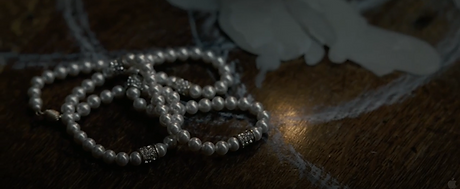
from "THE AWAKENING"
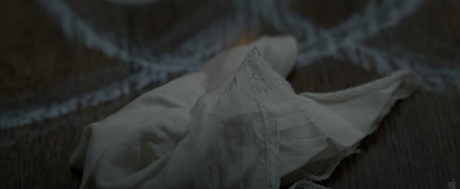
from "THE AWAKENING"

from "1408"

from "THE CONJURING"


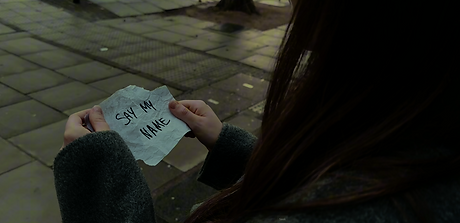
For the second preliminary exercise, I was inspired by the films I have made a research on, and so I did that through the storyline and camera shots.
I experimented with the storyline and tried a different trope: spooky doll. The girl is in her room, getting ready. She suddenly takes the spiritual attributes in her hands, like the necklace and the note (with curses). She goes to the bathroom to drop them to the sink. At the moment, the lights go down, and the scary doll appears. The storyline itself is inspired by "INSIDIOUS" and its supernatural plot twists.
The camera shots used are:
- medium zoom in (the first shot of the doll's shadow in the room)
- close-up
- extreme close-up
-medium shot
This exercise helped me to understand "good-looking" and working shots, that I might use in my future production. Especially carefully I worked on the first shot with the shadow. It was hard to create the shadow without special equipment, like light panel, however, I used the flash light on my phone, which made the white bright spooky shadowy figure on the blinds.

from "THE CONJURING"


from "THE CONJURING"

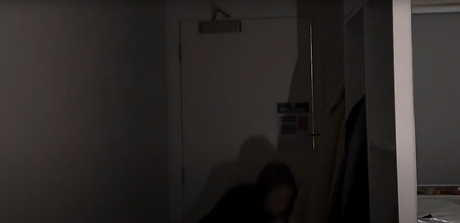
from "THE CONJURING"

from "THE CONJURING"

from "INSIDIOUS"
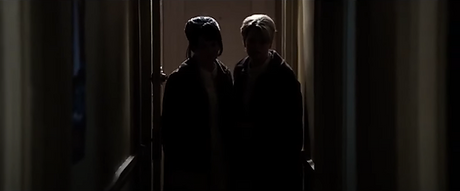
from "THE CONJURING"
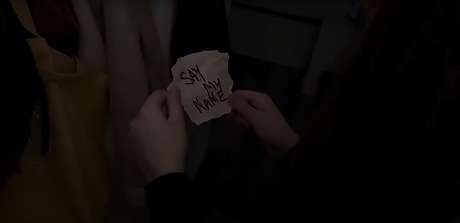

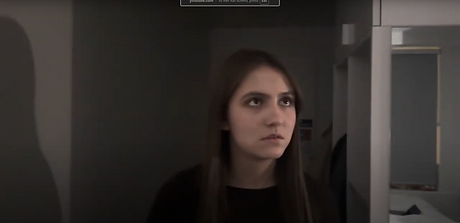
My last preliminary exercise is aimed to create a series of test shots for my initial film intro idea and to show I was inspired more by the film introductions from my research. This time, I developed more on the storyline from the first preliminary exercise and made it include the story about the girl, who is coming back home, where she finds the threatening note "SAY MY NAME". She notices the dark figure in her apartment, coming closer to see more. Eventually, she gets scared by the spooky ghost, standing behind her.
The camera shots used are:
- medium shot
- over-the-shoulder shot
- tracking
- reverse tracking
- POV shot
I worked hardly on the first shot sequence, where the girl enters the apartment. I got the inspiration by "THE CONJURING", and used the same medium shot of opening the door, entering the apartment and picking up the note. However, I need to practice more on picking up the note, as the film intro of "THE CONJURING" included a bit of panning down, while my video did not. Afterwards, there is a over-the-shoulder shot (also from "THE CONJURING"), which is followed by track - reverse-track - pov shot sequence, imitated from "THE CONJURING". I also took the inspiration from "INSIDIOUS" as well: the first shot of the shadowy figure.
For this task I decided to try natural lighting (no use of panel light) to see how it looks like in the frame, what shadows and contrasts it creates.
ADDITIONAL FILMING
This is a film that was created by me and group of my friends in school for an event "FILM DAY".
Students from the Film Academy of London came to our school to teach us a lesson about filming. After learning some theory about type of shots, plot twists and theorists, we were given a task to create our own 1-minute film in one hour. The topic given was - love obstacle, and we had to make only 10 shots in total:
1) close-up (x4)
2) medium shot (x2)
3) wide shot (x4)
We had only 15 minutes to plan the film (locations, types of shots, roles in filming and storyline) before starting filming and 10 minutes after filming for editing. My role in this project was a screenwriter and director.
The plot of this film involves a story about a dating couple in London, both of them are crazy in love with each other. One day they receive letters from the Harvard university they wanted to study in together, after finishing school. However, only the girl gets into the uni and the boy does not, which upsets both of them. The girl leaves London. But, after 6 months they realize that they miss each other too much and cannot live without each other. When she leaves her studying building, she sees him across the road. she runs to him and they get back together, no matter how far they are from each other.
The name of the film "3000 miles between us" directly links to the plot twist, as there is 3000 miles between London and Harvard.
For this project, my group and I got an Oscar for the best film. This experience did not only improved my filming production skills, but also helped to build up my team-working and team-leading skills.