JULIE EVTEEVA MEDIA STUDIES COMPONENT 1
PLANNING AND PRODUCTION OUTLINE
Based on the research done, my group and i got inspired by the films, like "THE CONJURING", "1408", "THE AWAKENING", "INSIDIOUS" and "THE RING" for our future film opening.
Taking inspiration from "1408", we want to create the horror opening, which tells the story about one stormy night, when something scary and mysterious happens to a teenage girl. It might include, getting the threatening note (like from "THE CONJURING") or facing some supernatural spirits (like in "THE AWAKENING").
The one generic convention of horrors we want to focus on in the opening is the dark stormy night. That would give the audience an idea of a horror immediately and engage them faster, so they would be hooked to continue watching. besides, we want our lead character to represent the age group of teenage girls between 16-17 years old, linking to the idea of a student (reference to "THE RING")


STORYLINE AND SCRIPT
Over the whole planning production, me and my group created 3 storylines. We tried very hard on creating a good and thrilling plot, so the audience could get engaged after the first seconds of the introduction watched.
1ST STORYLINE
0. BLACKHOOD ON THE STREET
The Blackhood is walking on the street. It is dark and rainy. The character turns to the apartment door and enters the porch.
the shots included: medium shot, reverse track
1. THE GIRL SLEEPING
The action cuts to the interior location - the flat. The girl is sleeping on the sofa. The TV is on, playing a TV show. It suddenly cuts to black.
the shots included: wide shot, medium shot, close-up, extreme close-up
2. THE PHONE CALL
The phone rings, it says "NO CALLER ID". The girl picks it up, and strange ambiguous sounds are heard. On the phone someone (THE BLACKHOOD's voice) says "Look around". The girl hangs out the phone. She looks around.
the shots included: close-up (of the phone + the girl's face), medium shots, tracking
3. THE NOTE
After the dead silence, the same strange ambiguous sounds occur, it is clearly understandable that the noises are coming from the entrance door. The girl is coming to the door. There is a note "ONCE YOU TOUCH IT, YOU ARE MINE" that was dropped from a letter box.
the shots included: pov shot, close-up
4. THE KNIFE
Threatening sounds amplify. The girl turns around. The black hood with a knife is seen in the see-through glass door.
the shots included: close-up, reverse track


For my first script draft I used the website "YouMeScript". It showed me how to create the right font, placement of the text and use specific terminology and abbreviations, like EXT., INT., CUT TO, O.S., FADE IN.
This script draft provides main ideas of overall production, pointing at the outside and inside conditions of location, where the action takes place. It uses specific and professional terminology.
However, i want to develop my ideas more, so the introduction is more scary and more professional. Besides, it lacks important details about the non-diegetic sound, type of shots, and some more actions should be included in the production, as for 2-minuite film production it is recommended to have 2 pages of script (1 minute of the production = 1 page).
That is why I came up with multiple ideas, that I want to put into the new script draft.
In this script i improved my ideas and even added one interesting idea - TV news reports, which i am planning to film separately and put as a real TV report on the TV in the production. I also added non-diegetic sound info, namely the wind and rain sounds, deep breathes and
the sound of a closing door. I developed the episode in the kitchen, when the black hood is scratching the door to scare the main character.
However, while i was writing and planning the production of this storyline, i realised that there are too many actions in one 2-minute introduction of the horror film.
That is why i decided to come up with another storyline, which is very similar with this one.


2ND STORYLINE
0. BLACK SCREEN
diegetic sound - disruptive breathing
1. CHASE SEQUENCE/RUNNING IN THE FOREST
The girl is being chased by the ghost in the forest and she is getting lost.
the shots included: reverse track, normal tracking, POV running, side tracking
ALSO: wide shot, medium shot (running towards and away from the camera)
*EVIL DEAD
2. WAKING UP
The girl suddenly wakes up from a dream. She is looking around.
The shots included: side shot, POV shot
Lighting: blue lighting
3. THE NOTE
There is a sound that somebody is banging on the door. The girls seems confused. The sound of something being pushed is heard from the side of the door. She is coming towards the door, where founds the envelope with the note inside.
The shots included: side shot
4. THE PHONE CALL
She receives a phone call that says "LOOK BEHIND YOU". She is coming towards the door, where she found the note earlier, opens the door slowly. Sounds exaggerate. She is turning around.
The shots included:
COMMENTARY
The second storyline is like a developed version of the first idea storyline. It includes the same parts, as waking up sequence and picking up the note. However, i added the chasing sequence in the woods, as one of the horror film trope. I also added the "phone call" scene, referring to "THE RING" plot.
Nevertheless, this plot included too many main actions for 2-minute film introduction, namely chasing sequence, the note and the phone call. It would be very challenging to fit all of them to the short production, and the audience could not be focused on one main action, happening there. That is why for my last story plot, i decided to concentrate on the chasing sequence only, which would lead the watchers to the idea, that somebody is following the character.
3RD STORYLINE
0. CHASING SEQUENCE (THE DREAM)
black screen, while lightning sound, fade in: it is dark and rainy. The girl is being chased by the ghost in the woods.
for this specific episode of the production, we created the shot sequence, which included these types of shots in such order:
1 - establishing wide shot (of the woods to show the lightning)
2 - track
3 - reverse track/ reaction shot
4 - POV shot
5 - reverse track/ reaction shot
6 - side shot
7 - POV shot
8 - side shot
1. WAKING UP
the girl wakes up from a dream, hearing the knocks on her door. She is in her bed in the room. She is going towards the front door. takes the flash light from the table. The knocks are heard again.
The shots included: close-up, medium shot, pov shot, tracking
2. BASEMENT STAIRS
The girl opens the front door, there is nobody there. She exists the apartment and looks around. She decides to take stairs down. It is darker in the stairwell, the girl slowly walks down the stairs, shining the flashlight around her. An unknown figure is standing on the stairs, scaring her. When the character looks closer, there is no figure found. The character approaches the basement door and opens it.
the shots included: medium shot, POV shot, close-up/reaction shot, tracking, reverse track, bird-eye-view shot (when looking own from the stairs)
3. BASEMENT ACTION
The girl enters the basement, shining her flashlight around to see her surroundings. She finds unusual tools, like knife, she looks at it. She is turning the flashlight until the moment she sees the body (jumpscare).
the shots included: medium shot, wide shot, close-up, extreme close-up, pov shot, tracking, reverse track. low angle shot (when walking down the stairs)


this is the final version of the script for the 3rd storyline. This pdf file provided will link you to the document with storyline for the 2-minute horror film intro.
FILM TITLE
the film title should evoke fear and curiosity, playing on universal fears, like isolation or ghosts and monsters, as it shapes how the audience understand, anticipate and emotionally prepare for the film.
As our final storyline includes the basement part, we want to create such title, that could create the link to the basement without direct use of the word "basement", which would establish the enigma (by Barthe).
we had so many options, some of them are:
1) "LOOK BEHIND YOU"
2) "BASEMENT MYSTERY"
3) "DOWN THE STAIRS"
but still, we were trying to find a unique film title for our opening scene, that would have a sense of basement in it.
That is why we came up with the idea of naming our horror introduction "IT WAITS BENEATH". It does create the enigma (Barthe), as it says that there is something waiting downstairs, so the audience could question that and get hooked only by the film title.
TITLE GRAPHICS
For the title we need to plan the graphics as well, so how it is going to look like on the screen, when the title appears.
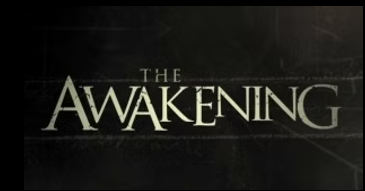
We are going to use serif font, which is the type of font that has "little feet" and lines at the ends. We want to use it as it also seems to play a role of creating mystical, ancient and gothic atmosphere in horrors. Some famous examples of the use of serif font in horror films are "THE AWAKENING" and "INSIDIOUS".


For our film title "IT WAITS BENEATH" we want to use serif font in capital letters (like in "THE AWAKENING" and "INSIDIOUS"). It connotes dominance and makes the typography on the screen appear as dominant and important. We are still thinking, whether to choose white or red colour. That is why we decided to see how it is going to look on screens.

white font creates artificial atmosphere, suggesting that the fear is cold. White is also a colour, that is commonly associated with the presence of spirits and ghosts ("white as a ghost"), which we are trying to achieve particularly, as our film introduction is for a ghost horror, which includes supernatural existence.

red font is a highly effective design choice, which creates immediate emotional from the audience. It signifies, warns of, and sets the tone for the horrors contained within the film.
This colour is usually associated with blood and violent nature of the story. It also signals immediate danger, alerting the audience that they are about to watch something intense (like on a stop sign or hazard warning).
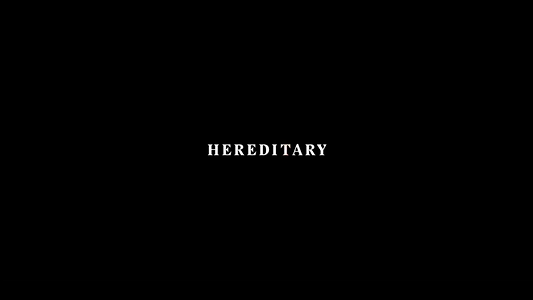
As our aim is to show a ghost-horror story full of spirits, but not a violence and evil, our final choice is the white capital serif font, which would make the audience immediately think of other ghost horrors that used white font in the titles, like "NOSFERATU" (1922, silent film) and "HEREDITARY".

ADDITIONAL RESEARCH
as the final storyline includes the trope of going down to the basement, I decided to do research on the films that include basement, as a place that is central to the plot of the film story. One film I decided to explore is "THE CELLAR"
THE CELLAR






PLOT
"The cellar" is a supernatural horror film, which was produced in 2022. It tells the story about the family, which moves into a rural home in Ireland, where their daughter Ellie disappears in the basement during a power outage. It is then discovered by her mother - Keira, that the house is controlled by an ancient demonic entity.
BASEMENT PART
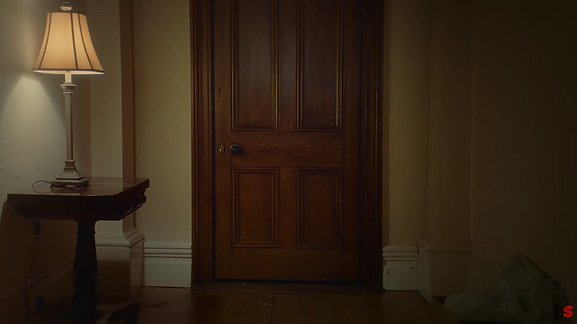
the basement part that i wanted to explore included: setting, lighting and camera work specifically for this place. Setting of the basement had a wooden door, spooky stairs and tools like candles, old knives and papers to indicate that this place is not in use usually.
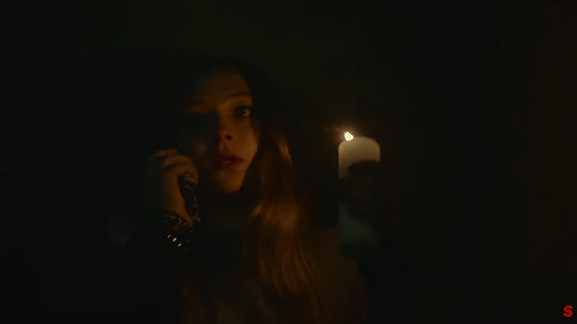
For the lighting, it is low-key lighting. In the scenes in the basement, only the lighting gadgets that the characters have are commonly used, For instance, here the girl Ellie is carrying the candle, or there can be seen the automatic light on the stairs, when she is going down.
There is shown a good range of shots, like:
1) medium shot of the door: that creates the enigma code (Barthe), and the audience wonders what is behind the door? is there a monster?. The audience is getting hooked by this action, as they are willing to know what is going to happen next and what is behind the door.
2) medium shot of the girl opening the door: this shot just shows the girl starting going to the basement. However, the basement itself is still not shown to the audience, which builds the tension and creates suspense.
3) low-angle wide shot: when they are going down the stairs, the shot used is positioned at a low-angle. Usually, this type of shot is used to create the effect of a powerful authority figure. It makes characters to seem more dominant, and imposing. but here it plays a key role in creating a sense of imminent threat and psychological dread. This emphasises vulnerability of the girl and creates unsettling feeling that something is going wrong for the audience.
4) close-up of a hand opening the knob: the close-ups are generally used to create tension and show the detail. In this case, the knob is being shown to the audience and how the character is opening the door by twisting the knob. Adding to that, the fact that it is happening slowly, which makes the audience to feel more tensed atmosphere.
5) close-up reverse tracking: this shot is seen, when the character Ellie is going down the stairs with the candle. The reverse track is used to follow the character's emotions, while she is going down the stairs. For the close-up, it makes the audience get more intimate with the character and read her emotions clearly. She is looking scared, which establishes suspense and tension.
FEMALE CHARACTER REPRESENTATION
The term "representation" in media language refers to how different identities are illustrated in films.
Stereotypical representations of gender are often constructed as simple binary oppositions: the stereotypical division of traits reinforces male dominance. This illustrates the point that tends to occur where there are inequalities of power. The main female traits are: passive, vulnerable, submissive, delicate and less intelligent as males. However, there is a term "final girl" that refers to a horror film trope, where the last surviving character is female, who confronts the character.
FEMALE REPRESENTATION RESEARCH
to include the "final girl" character into our 2-minute opening production, I decided to do a research on the films, where this trope is seen.
HALLOWEEN (1978)
This independent slasher (a film, involving a killer or a group of killers stalking and murdering a group of people, often by use of bladed or sharp tools) film was directed by John Carpenter. It stars Donald Pleasence (plays the character of Samuel Loomis), Jamie Lee Curtis (who plays the role of Laurie Strode, the final girl), P. J. Soles (Lynda van der Klok), and Nancy Loomis (Annie Bracket). This is the story about Michael Myers, who escapes from a sanitarium 15 years after murdering his sister on Halloween night in 1963. He returns to his hometown of Haddonfield, Illinois, to stalk and kill teenager Laurie Strode (Jamie Lee Curtis) and her friends on Halloween night, pursued by his psychiatrist, Dr. Sam Loomis.
SCREAM (1996)


The final girl in Halloween is Laurie Strode. She is an intelligent young woman, who survives after her friends are killed. Unlike her friends who are focused on dating and parties, Laurie is portrayed as more sensible and studious. This intelligence and resourcefulness are what allow her to survive and fight back against Michael Myers.
Laurie Strode is studious and responsible "final girl" who is initially presented as the virtuous one, avoiding vices like drinking and premarital sex.
While watching the film, i identified her main traits as a final girl: intelligent, resilient, and strong. This qualities she demonstrates by fighting back against Michael
Myers rather than waiting for the rescue. Over time, her character develops into a hardened survivor prepared for her enemy, a legacy of her traumatic experiences.


Scream (1996) is another American slasher film, which was directed by Wes Craven (also created "A Nightmare on Elm Street" - horror film) and written by Kevin Williamson. It stars David Arquette (as Dewey Riley), Neve Campbell (as Sydney Prescott - the final girl) and others. Set in the fictional town of Woodsboro, California, the plot follows high school student Sidney Prescott (Campbell) and her friends, who, on the anniversary of her mother's murder, become the targets of a costumed serial killer.
Sidney is the one who ultimately challenges and defeats the killers in the film's finale, making her the survivor.
The character embodies the "final girl" role with her intelligence and resourcefulness, as she is fighting with the killers through a combination of wit and action.
In one scene, Billy reveals to Sidney that he and his friend Stu Macher also murdered her mother, thanks in large part to her mother being promiscuous.
Sidney rescues her father and with the help of Gale Weathers, stops Billy and Stu from executing their plan of killing Sidney and her father and becoming "survivors". Sidney ends her traumatic time by killing Billy so he doesn't come back for that "one final scare".


A NIGHTMARE ON ELM STREET (1984)
One more example of the film that uses the archetype of the "final girl" is "A nightmare on Elm street". It is another american supernatural slasher film written and directed by Wes Craven in collaboration with producer Robert Shaye. It is the first installment in the "A Nightmare on Elm Street" franchise and stars Heather Langenkamp (as Nancy Thompson - the final girl), John Saxon (as Donald Thompson - the father of Nancy), Ronee Blakley (as Marge Thompson - the mother of Nancy), Robert Englund (as Freddy Krueger - the killer), and Johnny Depp (as Glen Lantz - the teenager who was killed in sleep by Freddie Krueger) in his film debut. The film's plot concerns a group of teenagers who are targeted by Krueger, an undead child killer, who murders teenagers through their dreams, as retribution against their parents who burned him alive.
The final girl in this production - Nancy Thompson - defeats Freddy Krueger by pulling him into the real world and using booby traps, only to then steal his power and banish him back to the dream world. In the scenes, when Nancy's friends are being killed by Freddy Krueger in their dreams, she realizes that to fight him, she needs to face him in her own dreams. She plans to lure him into the real world by setting booby traps in her house. Her plan works, but Freddy kills her mother - Marge Thompson. She then turns her back on him as he tries to kill her, she steals his power, and he disappears back into the dream world.
She is an active, intelligent protagonist, who figures out the mystery, actively confronts the killer, and survives by using her wits rather than just her virginity or luck. Unlike many final girls, who are just trying to survive, Nancy actively investigates and takes the fight to Freddy. She figures out the rules of Freddy's power, realises the importance of sleep, and generates the strategy of how she is going to fight him and bring him to the real world. Her victory over Freddie Krueger is not due to being a virgin, a trope common in other horror films, but instead it is a result of her intelligence and resourcefulness.
MY ROLE IN THE PROJECT
me and my group allocated the roles, that we are going to be responsible for, within our production. I have 2 roles: camera man and editor. Since camera man is a production film role, and editor works on post-production, i could combine the responsibilities easily.
EDITOR
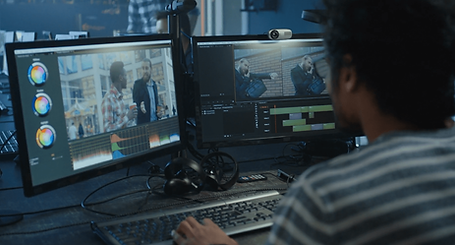

Film editor is a crucial member of post-production team, who selects, cuts and assembles raw, out-of-sequence footage into a coherent, emotional and engaging story. They have to work closely with the film directors to shape the film's pacing, rhythm and narrative during post-production to create the final polished product.
ADDITIONAL RESEARCH
as i am an editor, i decided to do a research on editing apps to choose, which one i am going to use for the draft productions and final product:
iMovie
- a free video editing application from Apple for Mac, iPhone, and iPad. It helps users to create movies by easy trimming clips, adding the titles, music, transitions, and special effects. The app makes professional-looking videos accessible to beginners.


PRACTICE


i decided to see how iMovie works in practice and understand, if it is convenient and easy in use for me in terms of well-quality editing.
It has an easy trim functions, like dragging clip edges to shorten/lengthen, using the trimmer for frame-accurate adjustments, and splitting clips to remove middle sections. One interesting features i loved is the soundtrack theme, which provides pre-composed, royalty-free background music, that automatically adjusts to fit your project's length. However, the sound menu with soundscapes is limited. Besides, there are many various filters from mono (black and white) to vintage (blue and yellow - shown on the right picture)
Capcut
- a very popular editing app for creating short-form social media content. It offers free basic tools, namely trim, split, merge clips, add music, filters, and text. It's known for making professional-looking videos accessible to beginners, with easy editing, caption generation, and direct sharing to platforms like TikTok and Instagram.


PRACTICE


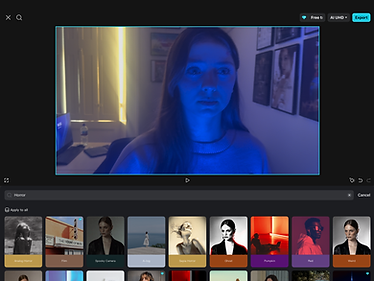
i chose the same shots from the test shots to try editing this sequence in CapCut.
The trimming process was as easy as it was in iMovie. Even though, some editing features are not available for the free version of the app, there is still a big variety of functions, like split, volume, animation, effects, speed change, cropping the shots, overlay, adjust and filters. As for filters, i liked CapCut more, as i could type the word "HORROR" in the filter menu and it would give me suitable filters specially used in horrors (examples: "sepia horror", "ghost", "twilight" and "spooky camera". In adjust section, i can easily adjust the shadows of the shots, and so work on the colour design of the production more.
Due to the bigger variety of features and easier screen set up (display), i would prefer to use CapCut for the future editing of all test shots, draft productions and the final product.
As i also decided to create mood boards and storyboards for the future project, i needed to explore some apps, that could help to make creative visual content:
ProCreate

- is a digital illustration app designed exclusively for iPad and iPhone, widely used for sketching, painting, and animation. The interface is designed to be clean and simple, making it easy for beginners to start, yet powerful enough for professional artists. Specifically for drawing, hundreds of customizable, handmade brushes are included.
It would be very convincing for us to use this app, as i would use my iPad to draw the storyboards with the Apple pencil.

LOCATION PLANNING
FRONT DOOR
When choosing the front door set up (for the first and second storyline), my thoughts were based on old "haunted" building, namely, the townhouse in London. There are lots of various vintage scary doors in the Kensington area. That is why I asked my friend to film shoots of the front door of his house. It is black with gold door handle and letterbox. especially during the evening/night time, when it is dark outside, the door would represent the sense of a fear and suspense (linking to Barthe's Enigma code).
I made the test shot of the front door, in case I find other places, and so, I could compare and select the best and the scariest one.

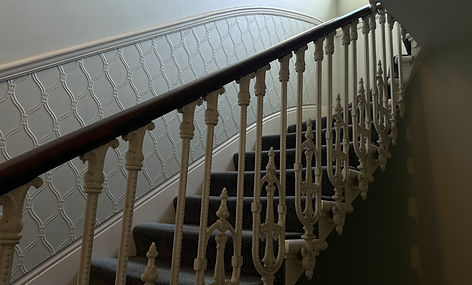
These are the fire stairs. I was considering to use more scary location in terms of stairs to provide more threatening atmosphere. I have made the test shot video of going downstairs to see if it works and how it looks on the screen.
One issue with this location is that there is an automatic light, the lighting turns on when there is any movement, so I cannot control it. It is not good as in the scene, where the ghost coming up the stairs, it should be dark and spooky.

STAIRS
The stairs are needed for POV shots of the character BLACKHOOD, when it is entering the apartment (first and second storylines).
stairs should be old and odd, and also low-key lifted (no automatic light). so, it makes the audience feel unease and tension. The first 3 photos, that are provided here, are taken in my friend's apartment.


MORE LOCATIONS


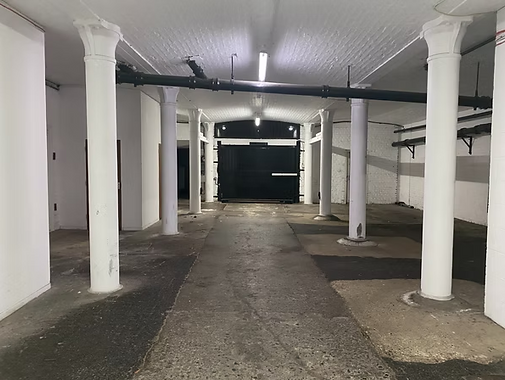
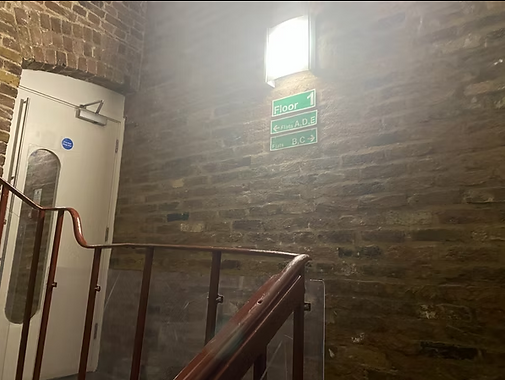


This location i started to consider, when the third storyline was written. The location particularly for this plot has to include: bed or sofa, staircase and, most importantly, basement. This is the apartment of the member of our project group, which makes it easier for filming in terms of availability to shoot scenes any time, with no agreement with people outside this project, like family or friends.
The first two pictures provided above were take from outside, so we could use these for the establishing shots at the beginning of the film. We also took photos of the ground floor and garage (the white room on the 5th and 6th pictures here), in case we would film there. The staircase perfectly fits into the idea of the whole production and creates scary and tensed atmosphere. The basement in the building already had the mannequin and unusual tools in it, which means we would not have to send the budget on these props.
finally, the insight of the apartment included the sofa, where we could place the main character - the girl, when she wakes up from the nightmare. besides, it had the little corridor, leading towards the front door, which we could use for the scene, where there is someone banging on the door. To see the whole set up i took lots of photos to see the apartment from different angles.
MORE EXTERIOR LOCATIONS
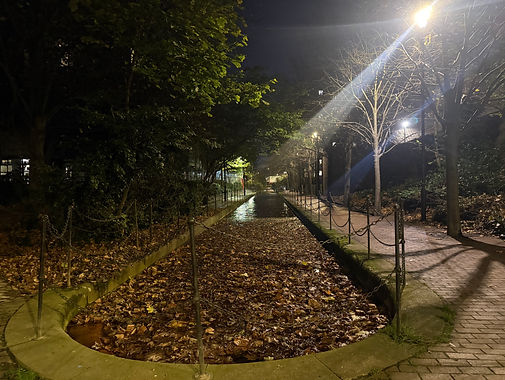

These pictures i took just in case, if we want to make some spooky shots of the outsight for the chasing sequence. However, i prioritise the option of filming the chasing sequence in the park, so it would look like actual woods.
INSPIRATION OF LOCATION

from "THE CELLAR": basement scene
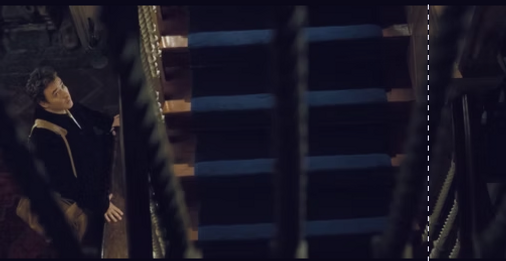
from "1408": staircase inspiration

from "THE CELLAR": basement scene


our location: basement
our location: stairtcase
our location: basement
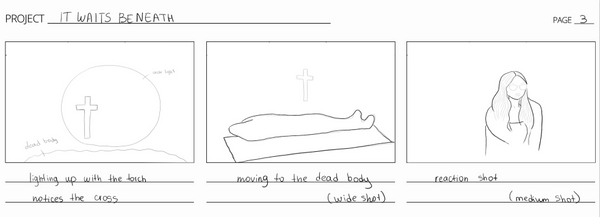
STORYBOARDS


COLOUR PALLETES


These are the colour palettes, that i put together. These are the shades that we are going to be seen in the frame, namely used in: costumes, make-up, setting, lighting and editing (filters).
Blue colour represents the mystery and unease. while making a research on the effect of this colour horror, I found that oldness, isolation, melancholy, and the supernatural, creating an unsettling, tense, and otherworldly atmosphere, often signalising death, anxiety, or something uncanny like ghosts, cursed objects, or icy environments, contrasting with red's passion and danger.
The most frequent use of the blue colour, I found in the films "THE CONJURING" and "THE RING".
MOODBOARD


COSTUME REFERENCES
THE GIRL
For this costume I needed to create the look of a naive and light-minded teenage years girl, so it would be easy for the audience to understand that she can just pick up the note from the unknown caller.
That is why I want to go with light, soft and pastel colours in her costume, like: baby pink, beige and white colour combo or baby blue and white colour combo.
for the type of clothing, I see the girl wearing something comfortable ad cozy, as in the scene she is sleeping in her apartment. Besides, it might provide a contrast between a vulnerable girl and a scary ghost, creating binary oppositions (by Levi-Straus). So, she would wear cozy loungewear: pants and top with a cardigan or a pyjamas shirt.



These are the pieces of clothing that I found the most suitable for the character, collected from my wardrobe, including: pink fluffy jumper with white top underneath, white/light grey trousers and comfy beige slippers.
This would make the watchers to understand that the action takes place in the safe and cozy house, where the girl lives, so that the ghost could appear very unexpectedly for them.


This is the final costume that we chose for the lead character - the girl (protagonist). We want to reflect the modern views and up-to-date fashion trends, considering the 16-17 year old teenage group.
That is why we went for the casual blue denim jeans and and a black top. She is going to wear a sweatshirt as well.
One accessory that we would like to add is glasses. This would add the character more intellectual look visually for the audience.
MAKEUP
We decided to use natural makeup since our character - Jess Cooper, is only a teenager (16 years old) and she is at home, sleeping in the room. Also, natural makeup represents more sophisticated and reserved characters.
However, we will use a specific tone of lipstick - between pink, brown and red. We found the similar shades of lipsticks in the brand Glossier, and the chosen item, is called G in the shade Drive, which is a shade with brown undertones, as this colour represents sophistication and maturity.


THE GHOST
This costume seemed one of the easiest to create,
as for The Black Hood the main thing needed is a
black hoody to match the name of the character.
For the references I found the ghost from the film
"SCREAM". But I did not want to use the black coat
(full coverage), so I decided to replace it with black trousers.
however, it is certainly that the hood is not suitable enough for the role of the ghost, as it would not look realistic. The hood would not create the shape of the ghost, which might ruin the mystery and not create the enigma code (Barthe).
That is why, I want to find a type of fabric or cape, which would be fully black, so it could cover the face of the actor.
FINAL COSTUME DECISION
after trying the total black outfit on the actor, we did not like the way the shape of the shadow body can be seen. Besides, on the staircase, where the ghost is going down the stairs, the facial expressions could be seen with just a hood on.
That is why the final decision was on choosing the black cape, so it could also create an illusion of a ghost, as the shape is uncertain.

FAILED COSTUMES
As previously stated, due to the multiple storylines, lots of costumes and outfits for the characters were created, before the final decisions were made. This is one of the roles, that eventually did not go to the final production, nevertheless, we made a research on the typical costumes the news reporter would wear:
NEWS REPORTER
This role was created as an experiment for the second storyline draft. Although, it was not eventually included into the final storyline, i still made a research on the typical news reporters costumes, before choosing another plot line.
This is a very small role in the whole production, however the episode with the news reporter still has to be filmed. That is why i chose the provided costume references.
In this job it is very crucial how you look, as it affects the audience's perception of information. That is why i see this character wearing smart cloting, like: trousers, a shirt/blouse or smart top and a jacket.
The colour palette would be: navy blue, black and white or beige.


I tried to be as close to the references as possible, so I came up with a baby blue formal shirt, smart cotton jacket and basic black trousers.
To make it more realistic, I would make a TV performance make-up and well-styled hair (waives or straight).
PROPS
As we wrote more than 1 storyline and practiced and tested all of them (3), i needed to created props for these screenplays. For the first storyline, the only prop i needed for the production was the note, that, according to the script, is picked up by the girl. I took the beige cardboard and made several attempts to write the note in paints.
1

My first try did not go well due to the limit of space, so the word "mine" did not fit. i used the black paint. However, the note looked intentionally cut, so it would not be convenient for the audience.
2

I tried to paint it in red as a second layer (already on another piece of paper) to create the blood effect, but it turned out too red, so i had to remake it. Besides, i failed with the size of the piece of paper again, as i wanted to make the writings look big, so that the audience could see clearly what it says, and hence, be involved in the storyline.
3
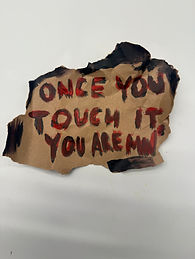
In the third try i experimented with the black frame to make the burnt note effect. It turned out too dark and big on the note, it almost covered the words on the note. It also did not look as natural as a real burnt paper, so decided to redo it, which led me to the final product.

This is my final prop that i am going to use while shooting the film introduction. I used beige cardboard, black and red paints to write the note and create the "burnt" frame. I crinkled the paper to make audience to believe that it has been used before, for example, by The Black Hood that put it into the letterbox.


In the second storyline, i needed to change the note, as it should say different message - "LOOK BEHIND YOU". This was what i practiced to draw on the same type of cardboard.
1ST ATTEMPT

In my first try, i ripped the paper the way it looks like it is done naturally, but not by by, so the audience could believe in the actual story happening in real life. The font is slopy and black colour enhances a threat and mystery.
However, The note seemed to be too small, so when it is filmed, the watchers could not clearly see what is written on it. That means there would be no enigma code created, and the audience would not question: who wrote the note? why the girl received it? is it a threat?
2ND ATTEMPT
.jpg)
In my second try i improved the font and made it even more sloppy by adding the red overlining on the black writing. I made this note a bit bigger, so it is clearly seen and understandable for the audience, what message the note has. I also added some stains (black and red) to create the effect of the note already being used.
However, props provided above were made for the 2nd storyline, which we eventually did not choose as the line for the final production. The 3rd storyline does not include the note, that is why I started looking for the props specifically for this script, namely we needed: the torch/ flashlight, unusual tools (found in the basement) and the body (for the jump scare).

THE DEAD BODY
This mannequin is going to be the main jump scare of the production. It was also found in the basement of the apartment building of my group mate.
It looks like a real dead body. That is why we decided to make this good scary prop - the main and final focus of the film (as it will be shown only at the end).
UNUSUAL TOOLS
These tools were found in the basement of the actual location, where we are going to film the horror introduction. They include: different types of scissors, tweezers, knives and some other unusual items. These would help us to create realistic view of the production, as they are not made specifically for filming as props, but they are actual real tools made of metal.
They will be used in the scene, where the girl just opens the door and enters the basement, seeing the strange stuff, that could enhance the fear even more.

AUDITIONS
To create the cast i needed to hold auditions for the roles, most importantly for the girl (this are the auditions for the 2nd storyline) The candidates are:
1) Alexandra Ivanova - 19 years old
2) Emily Brook - 19 years old
3) Elizabeth Golden - 17 years old
4) Zara Larson - 18 years old
for the final storyline, where the girl, following the ghost, got into the basement, we conducted another auditions. These are the candidates:
1) Tilly McDall
2) Elizabeth Golden
3) Chloe Simpson
4) Zara Smith
FINAL CAST

Chloe Simpson
Chloe Simpson is a new actress. She has never worked as an actual film actress before, however, she has got a background in film acting from the academy, that she has been going to for 10 years now.
As the film we produce is independent, our budget is limited. That was another reason, why Chloe Simpson is the best candidate to choose for the lead role of a final girl in the film opening.
One small feature, that made us make this final decision on the actress, is that she wears glasses usually (in auditions she had contacts on), which we thought about before, when creating the storyline, characters and the costumes.
SOUND PLANNING
As i am an editor in this project, it is very crucial for me to explore different platforms, where i can take the sounds from. From my previously done research and analysed generic conventions related to sound in horrors, i need to find a soundscape for the non-diegetic sound (this is the one that is from a source outside the film world; the characters within the frame cannot hear, usually added on post-production or has been used to suggest mood and atmosphere).
We firstly looked on YouTube to see of there are any options for the non-diegetic sound and these are some of the soundscapes we liked and considered. These soundscapes create the suspense and spooky atmosphere.
However, we wanted to have more options to choose from. That is why we decided to look at the sound menu of sounds in the editing app CapCut.

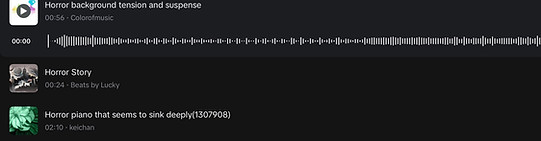
For the diegetic sound (this is a sound from a source within the film world, that is part of the mise-en-scene and can be heard by characters in the scene) we need a heavy breathing sound (for the chasing sequence); thunderstorm sound; shutting the door sound (when the ghost leaves the house); opening the creaking door sound (when the protagonist enters the basement) and taking the knife sound. This is how we decided to create or find all of these sounds:
1) heavy breathing: i am going to create this sound by the foley technique, which is creating and recording everyday sound effects—such as footsteps, clothing rustles, and prop manipulation—in sync with the picture to enhance audio immersion. Namely, here i would watch the video of the chasing sequence and pretend to rum in the room, while the microphone would be recording the sound.
2) thunderstorm: it would be easier to find this sound online to add it on post-production, rather than record it, when it happens in real life. These are some of the sounds that we might use
3) shutting the door: this is another diegetic sound, that we are going to add into our production, sing the Internet sources. These are some of them
4) opening the creaking door: we might do this sound, using the foley technique and the creaking door on the location ( when tested the location for the first time, we saw the creaking door there). However, there are some exaggerated sounds of the creaking door that we also might include
5) knife sound: this sound is needed for the scene, when the girl enters the basement and notices unusual tools. We are planning to record this sound on the location, as it would extremely hard to find a sound that would match the girl's movement of the knife. After we record it, i could increase the volume of it, so the audience could hear it clearly.
MOTIF
We want to create the motif for one of our characters within the production. That is why we decided to make a motif sound for the ghost character. It would help the audience to identify the character straight away, when they first see it and it appears on the screen. Besides, it plays the role of additional jump scare, as the sound itself will be very loud and sudden.
TEST SHOTS
In the first part of the shots i tried and practiced various type of shots with different angles to understand which ones i could use them in the future production.
Type of shots used:
-
close up
-
extreme close up
-
medium shot
-
wide shot (with and without high angle)
-
zoom
-
panning
-
tracking
After I have done these series of shots, I realized that I need to practice the shots with picking the note up. As in the test shots video, the audience can clearly see the note, when the character is picking it up, it does not create the enigma. That is why I wanted to practice the shot sequence: medium shot - POV/over-the-shoulder shot- medium shot. This medium shot also plays the role of a master shot as ...
To create the enigma, the audience should not see the note right until the POV shot. That is what I practiced in the following video.
In this test shots video, i practiced creating enigma in the scene of picking up the note. I also tried various types of shots, including:
-
medium shot (master shot)
-
tilt
-
over-the-shoulder/POV shot
-
low angle shot
For the first time I took some test shots of a medium shot to use it as a master shot as well. In the first two test sequences, the cameraman made a tilt, linking to the
reference of The Conjuring scene, when 2
women are coming to the apartment and find a note on the floor. The first over-the-shouder/POV shot presented seemed to be too removed, and also the note was blurred, so we decided to refill the shot to get a focus on the note for better understanding of the audience. we also experimented with the low angle shot, when picking the note up, however, we do so, the enigma cannot be created, as the audience could see initially what is placed on the floor.
In this try, I explored the area of shot sequences, when the character is going towards the door, then looking at the note. So, for this sequence I chose:
1) medium shot of coming closer
2) close-up of the note (like POV shot)
3) medium shot again (as a reaction)
However, I realised that there should be a reaction shot: a close-up or even an extreme close-up, so the audience can clearly see the actual emotion of the character, and they might get involved in the story shown.
LIGHTING TESTS
I started my lighting tests with the experiments of using different colours of light and what shadows they are going to create from various angles. The thing that we did is just circling the panel light around the camera, so it could be clearly seen which angles work best. I tried the green light as it creates the feeling of unease and oddness, however, I did not like how it looks in the natural environment, because it makes it look very unnatural and supernatural. The colours that I liked were blue and red. They make the character/subject look very mysterious and
darkly, especially if the panel light is placed at a low angle, so the spooky shadow is formed behind. Nevertheless, I would prefer to use natural dim warm lighting. That is why I practiced with yellow light. It created very natural lighting setting. I could use this type of lighting for the shots, when the girl is in the apartment to create deceptive feeling of calm and casual atmosphere.

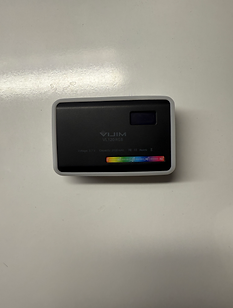
PANEL LIGHT
- a lightweight fixture, that contains LED (light-emitting diode) technology to illuminate an area evenly.
It offers continuous, even lighting for an appealing look and allows you to accurately change the intensity and color temperature, making it simple to obtain the appearance.
I decided to make a lighting test to see how different colours work on people in the frame and what effect they create.


This pack of test shots is an experiment of using flash. I used it in 2 constantly changing colours: red and blue. This could work well with a chasing in the woods sequence and before the scene, when the ghost appears, to build up the tension.
However, to make the action in the frame look more realistic, I want to use more natural lighting, like yellow or white panel light.
another test experiment with the light is movement with the light panel as I wanted to see if we need the light behind the character to enhance the mystery within the production.
CHASING SEQUENCE TEST SHOTS
In our first try of the chasing sequence, i made the sequence of these shots:
-
wide shot
-
reverse track
-
POV
-
side shot
-
tracking side shot
As it was only a test shot, we filmed the sequence in the evening, which did not allow us to get the dark night spooky atmosphere. This is what we are going to work on in our next test shot sequence.
Also, POV shots should be less swingy. To improve this, we could use a gimbal, which helps to make shots look more steady.
For the second try I went to the location later, so it could get darker and look more realistic, like it is a night time. We used the gimbal to make shots more steady. the POV shots were made a bit shaky on purpose to show live action of the character running, and to build tension.
The opening shot was an experiment: while we were filming the establishing shot of the woods, I decided to play with the blue lighting to create the effect of the lightning. With edited sounds of the lightning, rain, heavy breathing and footsteps this worked perfectly, and it looks like the real lightning just happened.


GIMBAL
- it is a handheld stabilizer, that helps the cameraman to keep the camera steady. It uses its sensors and motors to keep the camera balanced.
This is how we set up the gimbal.
When we moved during that test shot chasing sequence, the gimbal adjusted in real time to neutralize that movement.
This is one item of equipment that we are going to use, when filming the final production.
STAIRCASE TEST SHOTS
This was my first test shot sequence that I did on going down the stairs, as if I was going to the basement. We did 4 types of shots:
1) Close-up
2) Tilted angle wide shot
3) POV shot
4) wide shot (master shot)
Then, I put it into editor and combined them together, paying attention to some details to create momentum and continuity in the action (continuity editing), namely: the direction of looking around eyes, right or left leg
stepping on every single stipend emotion on the face/ facial expression (so it would not be like the actor is scared on the first shot, but is laughing on the second one)
This one we made right after the first try (the video above). We made the character to walk faster to see how we could hold the camera. However, due to the increased speed during this try the camera was too shaky. On this stage, we were also figuring out the roles of everyone in the group. So, we changed the cameraman. That is why this test shot video helped us to understand the roles for the future production as well.
This test shot sequence was done on the location, that we were considering to use. It includes:
- wide shots
- medium shots
- close-ups
- POV shots
- over-the-shoulder shots
- tracking
This location looks very spooky due to the old and narrow staircase. However, unfortunately, there
was an automatic light, so it would be bright in the room, when the character goes down. As we wanted to keep the room dark and scary to enhance fear of the audience, we decided to use another location.
CORIDOR SEQUENCE TEST SHOTS
This is the corridor sequence, which we came up with by the end of planning the production. We made the test shots in the classroom, using gimbal for stabilising the camera and panel light to test lighting from different angles.
When discussing, we came up with this shot sequence:
1- POV shot
2- medium shot (reaction shot)
3- POV shot
4- reverse track (reaction shot)
5- POV shot
6- reverse track (reaction shot)
7- POV shot
to gain a better understanding of how it is going to look, i did the storyboards beforehand:
The first POV shot shows, what the character is looking at, in this case it is the door; the shot stands still.
Afterwards, there is a reaction shot of the character, also standing, looking confused. This creates the enigma of what is hiding behind the door? is there a monster? what is going to happen with the character?
Then, on the next POV shot, the camera would start moving towards the door, imitating the the character walking. So, even though we are using the gimbal for filming, i would like to add a little shaking moving to humanise the movement.

There is another reverse track, so the audience could see the rection of the character, which brings the effect of engaging with the audience.
Finally, the sequence ends with the POV of the character, that moves slowly from the door view to the close-up of the door knob, which is opened by the character.
PROCESS PICTURES

while filming this test shot, we used the panel light to create the blue lighting, which makes the room look more scary and spooky. The actor was holding the panel light with one of her hands, so the face of the actor could be lighted and the lighting director could not be seen.
here we used neither the gimbal nor tripod, but instead we decided to explore the handheld filming. This helped us to create more realistic shots due to little hand-shaking.
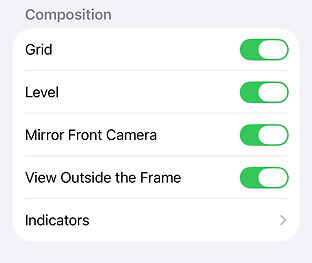
To create the symmetrical composition, we advanced the camera settings on the phone. We turned on the grid on the camera for the following the rule of thirds, added levels and view outside the frame. These would help us to film the shots horizontally and avoid tilted angles on the shots, when it is not needed.
.jpg)
CAMERA SETTINGS
These are the settings I put on the camera of my iPhone:
1) grid - for "rule of thirds"
2) level - displays a guide on the screen to ensure horizons are straight
3) mirror front camera
4) view outside the frame

FINAL TEST SHOTS
this is a bunch of test shots, that we filmed on the location before the actual filming, for the waking up sequence. We tried to keep the camera still by using the gimbal. Besides, the shots itself needed to be symmetrical, so we carefully followed the rule of thirds and composition frame rules by the previously adjusted advanced camera settings. These are only for the first medium shot of the sequence.
During these test shots, we understood thins that we should improve. for instance, the symmetry and the pace of a girl sitting up.
These are the test shots for the second shot the sequence: a medium shot with a fast zoom-in to the face of the character.
we tried various speeds on the zoom-in, starting with a slower one. It turned out to be too. slow for the effect that want to create (shifting the focus abruptly; due to the quick movement, it brings claustrophobic and shocking experience).
This is what I edited after we did two separate shots (medium shot of a girl sitting up and medium shot + zoom-in, when she sits up). I practiced a lot to make these shots flow smoothly between each other, so there would be a match on action and no continuity error.
This practice would help me in the future, when editing the final production, as I would already know how to trim the shots in a way, so they flow smoothly.
ADDITIONAL TEST SHOTS
Before the production we made a lot of different test shots. We decided to edit some of them together to create sequences and separately.
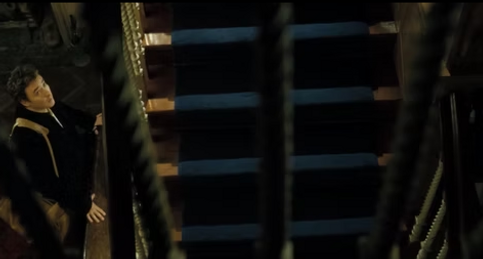
this shot was done one of the first shots for the production, We took inspiration from "1408" low-angle shot. Here, the girl is going downstairs to enter the basement.
This video was our groups preliminary test shot for how the character would grab the flashlight in our horror film opening.
This was our first test shot for how the body would be revealed, we liked the idea of having the light quickly flash to reveal the body and decided to use this in our second draft production, where we slowly shine the flashlight across the body before revealing it to add mystery and tension to the shot.
This was our initial test shot for how the character would turn around after hearing the first knocking sound in our horror film intro. Since then we have decided to change the place, which will now be in the dining room, however the character will still be turning their head around to the right so they can face the camera.
This video was our groups preliminary test shot for how the character would grab the flashlight in our horror film opening.
after we did all the test shots, we decided to analyse our shots and make them better. The low-angle shot was replace with the high-angle shot to emphasise the vulnerability of the character. In the basement shot of taking a knife, lighting was made more low-key. For dead body shot, we decided to make it darker and experiment with the positioning the figure, putting the camera a bit lower.
SHORT FILMS INSPIRATION
After the research of widely-known mainstream and independent horror films openings, we want to get more ideas of shots used, mise-en-scene performance and editing techniques from other films, so the choice was to watch short films and gain more knowledge about the horror film introductions.
1
BASEMENT DWELLER
this is the first independent short film, that we have been inspired by. It uses the basement as a horror trope, which matches our storyline, so we could get a better understanding of the use of basement in horrors, and apply it successfully to our future production.
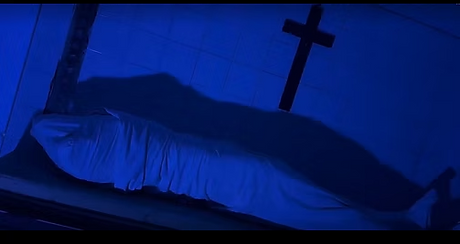
The use of tilted shots here create tension and amplify the scary scenes, which we tried to use in the reveal of the body/mannequin in the basement.

shot from "Basement Dweller"
our test shot
After trying this tilted shot of the dead body put, we analysed it and decided not to use this type of shot for this scene, as we found it looking too chaotic. Alternatively, we are going to use an even shot, following the rule of thirds, to reveal the body instead.
2
THE TEN STEPS
This short film is good at building tension through the use of camera work, it uses a long series of POV and reaction shots. We have been inspired by these POV and reaction shots as it rapidly builds tension and makes it seem like something is approaching, we have used these long series of POV and reaction shots in our draft productions. At first we took inspiration from this and tried to have the character use a lantern instead of the flashlight, however we decided against this as the lantern didn't light up the basement enough and also seemed out of place in our modern time period, as using a lantern is not common.
DRAFT PRODUCTIONS
throughout the project, my group and i, created not only the test shots, but also the draft versions of the whole production. Eventually, we filmed 3 draft productions:
FIRST DRAFT
our first draft was done even before writing the final version of the script. That is why we decided to experiment with the storyline, creating the plot of a girl hearing noises from the basement.
This version includes such types of shots as:
1- over-the-shoulder shot
2- wide shot
3- POV shots
4- reverse track
5-medium shot
After multiple watches we saw many of our
mistakes and other issues, that will not be included in our final movie. Firstly, there were some continuity errors made whilst editing the draft production. For example, the character walking forward, but after a cut, they are back in the same position. We will use a motivated cut in our final horror film for some contrast between shots. Secondly, the camerawork should be improved: the character's face is sometimes out of frame, or the other group members are seen in the shot. Besides, sometimes the camera went out of focus. That is why we will fix this by waiting for the camera to focus carefully and following the rule of thirds. We are also going to use a wider variety of shots, more POV and reaction shots and an extreme close ups. We also want to add more non-diegetic sounds to the film introduction to create more tension and build suspense.
SECOND DRAFT
For this draft, we filed the basement scenes, which included:
1) going down the stairs/ following the ghost
2) basement sign
3) noticing unusual tools + taking the knife
4) noticing the cross
5) noticing the dead body
The draft still needed improvement in lighting.
In the basement we tried to make it as dark as possible. However, it turned too dark to film the girl's face, when she is looking at the unusual tools, so we used the flash light on the phone, which made her face too bright and ruined the threatening atmosphere of the place. That made us do a lighting practice and tests (see above in the test shots section).
We also needed to work more on the corridor sequence, so we did after we got feedback about this draft (see corridor sequence in the test shots section).
THIRD DRAFT
this is the first draft that includes the chasing sequence in the forest. For this scene we decided to choose the location of the park near the haunted house location. This is what we have to work more on, as in the frame, the audience could see regular houses. That ruins the mystery and enigma, because it is not a fully isolated place. Besides, there are lampposts all around the park, which does not allow to create the atmosphere of the dark stormy night.
Also, we experimented with the shots for this sequence and made a high-angle close-up of running feet, which we have never seen before in the previously researched films. This does not really work within the film genre, that we want to fit in, as it does not create any additional effect of fear, threat or suspense.
Other things to improve include the waking up sequence: the first shot, where the girl wakes up and sits up should more symmetrical and less shaky.
We tried to keep low-key lighting, however, we want to add more blue colour into the frame. For this we would panel light on more intensive level of brightness.
we also do not like how the episode, when the girl exits the house, looks like. The green door ruins the mystery and tension, which was building up in the dark spooky house. This is why we want to exclude this scene from the final production.
We decided to experiment with lighting in the basement and made it red, using panel light. Red is associated with blood, so it adds the scary atmosphere to the introduction However, after several watches, we realised that red colour makes it too much, too bright in the frame, so the actual action is a bit challenging to see by the audience.
INSPIRATIONAL SHOTS
high-angle shot from "1408"

our test shot
We took inspiration from "1408", when going to the basement, using the staircase. This shot enhances the character's naivety and vulnerability. It also suggests that there is something supernatural might come from the top of the stairs. In our future product, we want to recreate this shot, but making it more symmetrical, than it is now, to bring power to the action.

POV shot of the weapon from "HALLOWEEN"

our test shot
inspired by the POV shot in "HALLOWEEN", we explored how to film the shot of the girl taking the knife in our draft. This shot turned out to be a bit too wide to establish threat for the audience, so we would experiment with the formatting of the shot in the next draft.

tracking shot from "INSIDIOUS"

our test shot
another shot we were inspired by is the tracking shot from "INSIDIOUS". Even though our shot is not a tracking shot, but instead a POV panning, the inspirational shot helped us to compose the shadowy figure/ ghost into the frame properly.
FOURTH DRAFT
In the final draft, we did the chasing sequence in an appropriate location, which is isolated and dark (the park).
The waking up sequence still needs improvement, as the shots are still not symmetrical.
To create the sequence of shots that flow smoothly after each other, rue of thirds, 180-degree rule and continuity editing should be carefully used. That is why we decided to practice this
sequence, so we did bunch of test shot sequence (see above in the test shots section - FINAL TEST SHOTS).
It was the first time, we tried to film the episode, where the ghost exits the house, shutting the door, when the girl wakes up. It was hard to film, as we tried to find the right angle. Here, we used low-angle shot, which did not work the best, that is why we will try another angle next time, when making the final version.
We need to work more on lighting in the staircase scene, it is too light. As the light is automatic there (we cannot adjust it or turn it off), this should be doe on post-production, while editing. I will darken the shots by using the filter and adjustments in brightness.
There is also a scene, when the girl opens the first door to enter the basement. We decided that next time we would exclude this episode, as there are too many doors that girl opens within only the introduction.
For the moment, when the girl is in the basement ad hears the noise behind her, we used the POV shot. It looks very shaky and not logical, as the audience cannot understand what she is looking at due to the movement of her turning around, being too fast.
In the scene, when she notices the ghost standing, the camera movement should be more abrupt to create the sense of suddenness and immediate fear of the ghost.
We experimented with the last shot here: made it tilted. It looks more dramatic, compared to the regular symmetrical shot. However, it seems too unnatural and unrealistic, so we want to remain the regular wide shot of the dead body at the end.
PRODUCTION COMPANY PLANNING
After the done research on different production companies that made such films as "The Conjuring" (mainstream - New Line Cinema + Warner Bros. Pictures), "1408" (mainstream - Dimension Films), "The Awakening" (mainstream - Studio Canal + BBC Films), "Insidious" (independent - Blumhouse) and "The Ring" (mainstream - Dreamworks Pictures) and the additional research on A24 production company, we made a decision on the production company, that we would like to use for production and distribution for our 2-minute horror introduction, which is Blumhouse.

Blumhouse produces films on a low budget and support young directors and give them creative freedom, this is because they are an independent studio, and do not need to follow the mainstream trends in movies.
Blumhouse creates films that challenges the normal themes and genres of mainstream media. For example, this is shown in the psychological horror film "Get Out", which speaks of the challenges of being an African-American man living in the US.
This is a storyline that is rarely followed in mainstream films, the films psychological aspects makes the audience ponder and piece together small elements and details. This film also reminds viewers of wider significance about issues of racial inequality and trauma.
In conclusion, we chose Blumhouse as their choice to support young directors fits with our needs as new and young producers for our film "It Waits Beneath".


TITLE SEQUENCES
Now, when we know the production company, that we are planning to use for our 2-minute horror introduction, we want to look at title sequences of other horrors, so we could understand when and where to put the production company logo, actors names (credits) and the title.
PRODUCTION COMPANY


Looking at "The Conjuring" and its film title sequence, we are taking inspiration from it. The production company logo appears on the screen, before the film starts. Here, there are 2 studios that produced and distributed the film, th order of appearing them on the screen depends on the dominance in participation in production of the project.
This is what we want to do with our production company. we are going to put the logo of Blumhouse right at the begging of the introduction, so it gives the audience the idea of what kind/ type of film it is expected to see now.
Our production company is Blumhouse. We found the production company intro with its logo. However, it is about 15 seconds long, which might make our final product too long, over 2 minutes.
That is why, we are going to take only the part from it, so it takes only 2-3 seconds.
ACTORS NAMES
The final thing that we had to think about related to graphics for our production is the title sequence, namely the actors names appearing on the screen (as the we had already done title graphics planning).


We looked first at the title sequence of "1408". There is only 2 names of actors - John Cusack and Samuel L. Jackson, before the title appears on the screen.
Each of the names are lasting on the screen for 4-5 seconds, before moving on to another one.
In "1408" the font is sans serif (without feet and lines at the end of the letters) and they are animated with the subtle, slow cinematic fade-in at the beginning to introduce the name, and fade-out at the end to make the text disappear, The effect used here is like dissolve, so the texts are like flowing down on the fade-out.
For our production, we are aiming to create similar effect of ghostly credits to give the audience the audience of a ghost horror, taking inspiration from "1408". That is why we are going to make each name of the actor to fadein and fade-out, making the overall duration of each name on the screen at around 4-5 seconds.
TITLE
Most of our inspiration for the title appearing on the screen we are taking from "Insidious". The title appears suddenly right after a very short black-out (the screen goes black). It comes with the sound that enhances to the end of the title (when the title disappears): there is a non-diegetic soundscape and extra added sound effects, that remind of spirits or ghosts. This is what we want to do as well, to work on the sound, while the title is on the screen, to bring meaning to it as well by coding enigmas in it (Barthes). Besides, the title seems to be zoomed-in, becoming bigger by the end of it. That makes the audience to get an idea of fear and threat coming closer to them. We also might try to recreate this effect.


As i have already mentioned in the title graphics section, we are going to use the white font, taking inspiration from "The Awakening", but the sound work are going to be done, carefully looking at "Insidious".

AUDIENCES
1
DIVERSION AND ENTERTAINMENT
Our 2-minute horror introduction is aiming to offer people to escape (or be diverted) from everyday life into another world created by the text and to gratify their need to be entertained. They choose entertaining texts, that allow them to divert their attention from the real world. To get attention from the audience and to get them engaged within the production, enigma codes (Barthes), binary oppositions (Levi-Strauss) and equilibrium theory (Todorov) should be used throughout our production.
2
PERSONAL IDENTITY
Texts can be used by audiences to relate to, identify with and compare their own lives with the circumstances or characters or narrative in the media product. This is what we want to achieve in our film opening. The protagonist of the introduction - the girl, represents the teenage girls from 16-17 years old. We want our audiences,, and especially the targeted group (16-17 year olds) to identify and compare themselves with this strong, brave and independent character, which would lead to meeting their self-esteem needs, that help to reassure their status and identity.
3
SOCIAL INTERACTION
Social interaction usually involves texts, that can be used by audiences to allow them to socially interact by watching a media product with them (watch party) and/or talking to others about them - 'water-cooler' television. We are planning to create such film opening, that would allow the audience to talk about, share the emotions and opinions about it. Targetig teenage audiences, we would suggest to watch it with a friend group on a house Tv, using streaming platforms, or they may also like to go to the cinema and watch it there to get group experience of watching thrilling horror together.
Another thing to mention is parasocial relationships with media figures they have never met in person. Audiences may feel, that the characters in the product are their "friends". Parasocial media relationships can be beneficial as "social surrogacy" for lonely people.
4
AUDIENCE POSITIONING
Audience positioning concerns the relationship between the specific product and the responses an audience may have to that product. The producers encode the product with meanings and messages through media language, and the audience decodes these messages. So, we try to achieve the same effect through our production: making the lead character a girl, who is facing her fear of spirits and ghosts, we are putting the meaning of a very different (from stereotypical female) female protagonist, highlighting her independence and strength. However, different audiences will decode the same products in different ways and will therefore have a different response.
5
TYPES OF AUDIENCES
As our introduction is produced by the independent company Blumhouse, it is aimed to be shown to a specific type of audience. Blumhouse targets a specific type of independent audiences, such as reformers and explorers from the Young and Rubican’s audience theory.
Explorers generally like to discover new things. They are attracted by brands that offer new experiences and instant results. We hope our 2-minute opening would let the audience to experience not only the generic conventions, that are common for horror films, but also the play with them and challenged features of the genre. One example that i can provide on the planning stage, before the final production is that instead of typical blonde girl protagonist, our character is brunette, challenging the typical stereotype of a female character.
Reformers are liberal-minded, socially aware, and anti-materialistic. They value changing (reforming) society for the better through their consumer choices. They tend to be innovative and are less impressed by status. They usually buy brands that are environmentally friendly or those that are considered healthy. Our introduction perfectly suits this type of audiences, as we are young directors and producers, who try to create new ideas and meanings that can be put into the film introduction afterwards.
DISTRIBUTION AND PROMOTION
PLANNING
1
As we are creating the independent film, we want to use appropriate distribution models. From the researched streaming platforms, the one we would like to use is MUBI. we chose it, because this platform prioritises quality over quantity, which we try to achieve and show our audience. Besides, MUBI has become the destination, where fans can share, discuss, rate, read and enjoy all things film. This is the strategy that we are also willing to use: let our audience speak and share the feedback, so eventually, the film could be appreciated and well-rated by professionals.


2
We also want to target the audience group of teenage girls 16-17 years old (the same age as the character). That is why, we think, social media would be a good promotion tool, as it is widely used by teenagers now. We would like to create an instagram page for the film "IT WAITS BENEATH", where we could post the trailers, film teasers and dates of premier in cinemas.
.webp)
3
another model of distribution that we might use is the limited releases in the niche cinemas. The success of the film will then be used in future marketing materials.
There are many independent cinemas in the UK:
1) Prince Charles Cinema
- it is an independent cinema located just off Leicester Square in London's West End. Famous for its cult status, it offers a rotating, eclectic program of classic films, cult favourites, sing-alongs and marathons. It shows films often in 35mm or 70mm formats. This venue is known for a welcoming, nostalgic atmosphere and affordable tickets.
2) Electric Cinema
- it is one of Britain's oldest purpose-built cinemas, and was established in 1910. It offers a luxurious, vintage viewing experience featuring leather armchairs, footstools, two-person front-row sofas, and blankets. This might be a more challenging option to consider due to the low budget of our production.
3) Everyman
- it is a cinema chain, that redefines the movie-going experience by combining mainstream and independent films. While showing blockbusters, they are renowned for screening independent, specialized, and classic films, often featuring Q&As.

everyman cinema

electric cinema

prince charles cinema
4
Another distribution model, that we might use is film festivals. There are many major festivals, that support independent film producers. This is very crucial, as they connect niche and low-budget films directly with a passionate, built-in audience and specialized genre distributors, which might be beneficial for obtaining bigger audience of explorers and reformers, and gaining recognition. After the previously done research on festivals (see the research page - distribution models), we might send our film to FrightFest (dark heart of cinema," this major festival runs in London and Glasgow, showcasing the best in new international and independent horror) and London Independent Film Festival (Held in the spring at Genesis Cinema, focusing on low-budget, emerging filmmakers.

